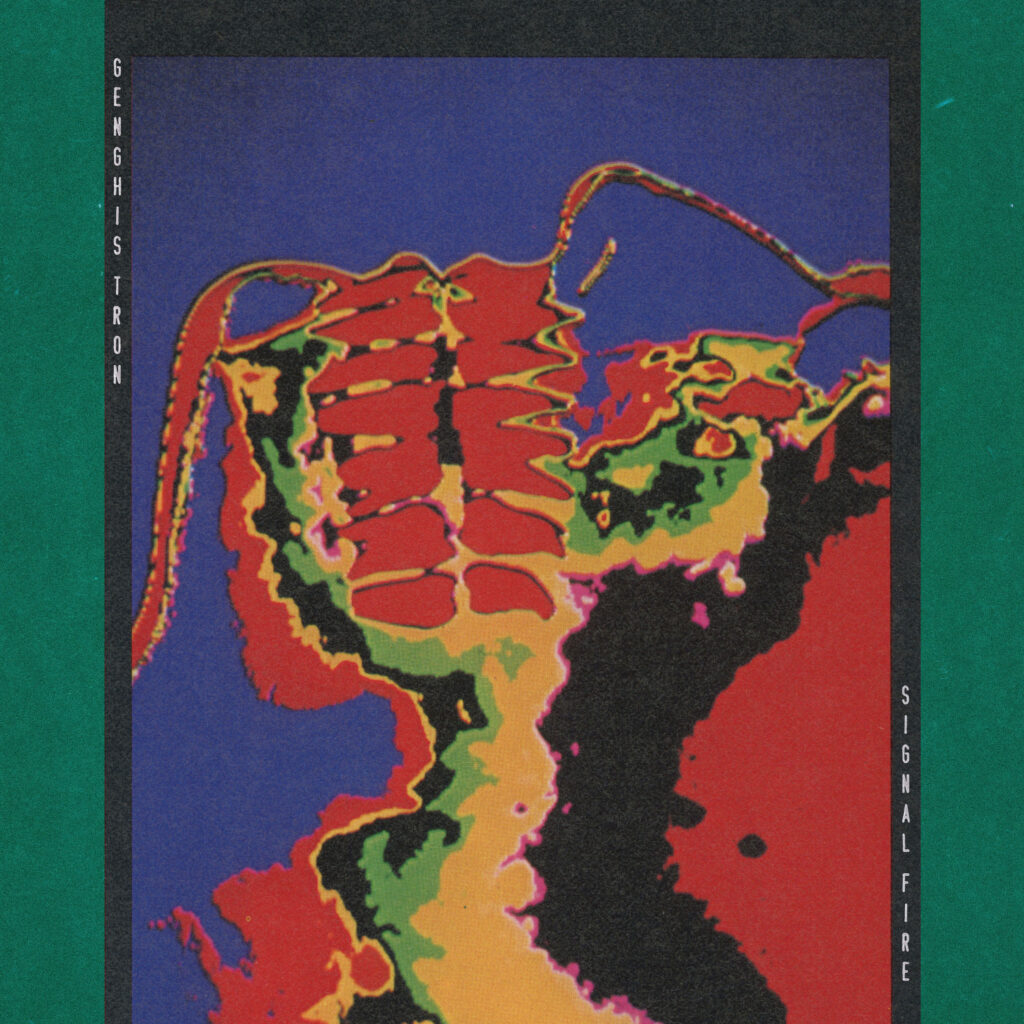
When Genghis Tron burst forth into the world of experimental extreme metal with 2006’s Dead Mountain Mouth, they felt like a very linear continuation of a particular bent of genre-expansion that took in everything from Lightning Bolt to Atomsmasher, Discordant Axis to The Dillinger Escape Plan, Burnt by the Sun to Agoraphobic Nosebleed: music designed to be as challenging to listen to as it was to play. Over the course of two albums, they would chart a course that was entirely their own – grindcore drenched in electronica, programmed drums that sound like spiralling chaos, and little in the way of respite for the listener.
Of the pair, 2008’s Board Up The House was significantly more interesting, dragging in a bunch more influences and giving some space to the chaos, but while they made waves in certain sections of the more chin-stroking fringes of the metal world, they failed to break through in the same way that Dillinger or Converge did. There were no more albums, and it seemed they had gone the same way as so many from that scene – The Judas Factor, Drowningman, et al. All of which made 2021’s surprise return, Dream Weapon, all the more pleasant. Not only was this former stalwart of extremity back, but in the decade or so in between, they’d morphed into something entirely new.
Gone were the harsh vocals, the insanity, and, well, pretty much everything else. In its place was a shimmering, epic, beautiful soundscape, somewhere between shoegaze, synthwave, and post rock, wrapped around lush melodies that Chino Moreno would have been proud of. It was, frankly, an astonishing about turn, made even more remarkable by just how well it worked. All of which begged the question: what would come next? Where would the Tron go next on their musical explorations? Well, as becomes instantly clear within the first few minutes of Signal Fire’s opener, ‘I Am All’, the answer is everywhere, all at once. From its playful, NIN-like opening to the welcome return of the screams, to a positively monstrous post metal closing groove, it doesn’t half set out a signal. As Tony Wolski repeats again and again, “I’m on a tear.” He’s not kidding.

Dead Pony’s 2024 debut album Ignore This gleefully blew the doors off in a kaleidoscope of 2000s nu metal, pop rock and irrepressible energy they translated to stages up and down the country. It was a bold statement from a band that had felt overlooked, or that their home Scottish scene had felt overlooked in the UK at large, and wanted to make something totally undeniable. Well, mission very much accomplished, and the bar was set high for its followup.
Rather than rushing immediately into album 2, Dead Pony instead took their time to hone their craft further onstage, earning a reputation for starting the party wherever they were. That energy is writ large across the six tracks of Eat My Dust!, refining their songwriting chops even further to deliver a raucous set of surefire bangers. ‘What If?’ is a slow burn that asks “what if I’m still not good enough?”, building from its initial melody to a churning metallic groove.
It’s after this false start that Eat My Dust! truly kicks into gear with the dance floor stomp and snaking synth lines of its title track as Shields defiantly declares “let me show you how we run this town”. ‘Freak Like Me’ deploys staccato chords and a Y2K nu metal beat while Dead Pony prove they’re only getting more adept with earworm, singalong hooks. As opening gambits go, it’s one hell of a way to make an impression.
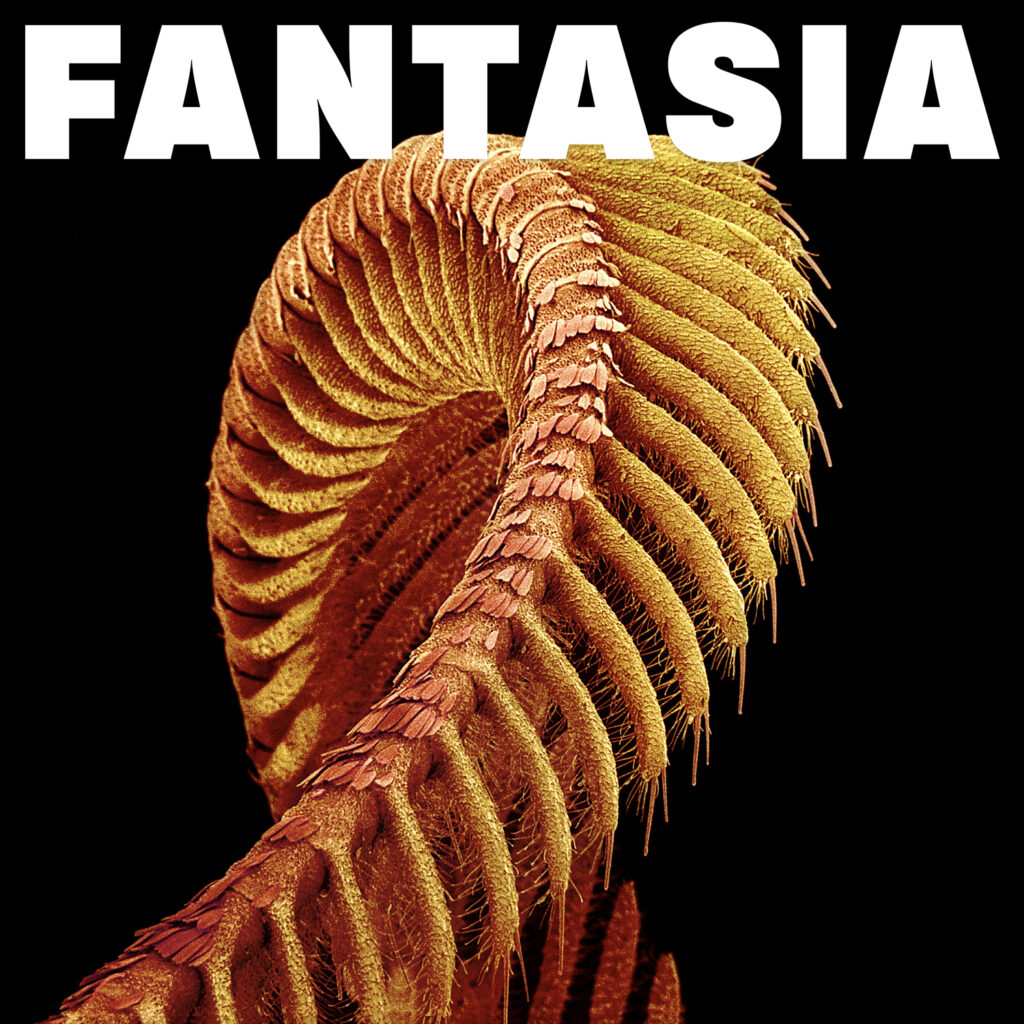
If Slift’s third album Ilion was a sci-fi flavoured slice of hard-hitting psych-rock, the band have swerved into something far more fantastical for the aptly named Fantasia. Slift’s vocalist, Jean Fossat, took inspiration from Argentinian author Jorge Luis Borges whose stories involved themes of chance, infinity, dreams and mythology, and that inspiration is written large in every one of the eight tracks on offer here, and especially on the fifth track ‘Orbius Tertius’, a title borrowed directly from one of Borges’ short stories.
The band has moved away from the sprawling song structure of Ilion, where almost every track on the album was over 9 minutes long. Fantasia’s longest track is the eponymous Fantasia, clocking in at a whisker under that 9 minute mark. It’s a slow, doomy opening to the album, with Fossat’s snarling, almost plaintive lyrics letting you know that you’re in for a different experience here. There’s a new story to tell, something more thoughtful, more contemplative, something fantastical, a feeling bolstered when the synths kick in around two minutes into the song.
The immediate assumption would be that Hum of Hurt is little more than a companion piece to Love Is Not Enough, a collection of leftovers or ideas that didn’t quite fit the mould of its predecessor. Thankfully that couldn’t be further from the truth. Whilst the two records share the same DNA, Hum of Hurt quickly establishes itself as its own beast, another chapter in the ever-evolving sound of a band that still refuses to stand still over three decades into their career.
Whilst Love Is Not Enough often felt like being pinned beneath a collapsing building, Hum of Hurt is far more kinetic. The riffs don’t simply bludgeon listeners into submission, they bounce and lurch forward with an almost reckless energy. Every member seems locked into the same pulse, pushing and pulling against one another whilst somehow remaining perfectly in step. It’s a record that demands movement, whether that’s a nodding head, tapping foot or a packed room of bodies crashing into one another. The groove running through its core is impossible to ignore.
For all the talk of Converge’s extremity over the years, one of their greatest strengths has always been their understanding of momentum. Chaos for chaos’ sake is easy. Making chaos feel purposeful is something entirely different. Hum of Hurt thrives in that space, balancing untethered aggression with an infectious sense of groove. There are moments where the band sound as though they’re about to completely fly apart, only for a perfectly timed rhythmic shift or monstrous riff to pull everything back together.
Cage Fight have not softened their sound or abandoned the hostility that made their debut hit so hard, but there is a clear sense that this record is reaching for something larger than straightforward metallic hardcore catharsis. The aggression is still overwhelming. Riffs arrive in thick, violent waves, drums snap with hardcore urgency, and the entire album carries the suffocating weight of a room running too hot. What changes this time is the sense of control. Where their self-titled debut thrived on pure blunt force, Exuvia feels more deliberate in how it applies pressure. The violence lands harder because the band know when to pull back and let tension build naturally.
Rachel Aspe remains the defining presence throughout, delivering the kind of performance that turns chaos into something deeply human. Her screams remain vicious throughout Exuvia, but it is the emotional instability behind them that gives the album its identity. There are moments where her delivery sounds genuinely ragged, like the songs are threatening to come apart around her. That rawness gives the record its edge. Even when the band lean into melody or atmosphere, there is still something deeply uncomfortable sitting underneath the surface
That discomfort becomes one of the album’s strongest qualities. ‘Oxygen’ carries a sense of emotional exhaustion that lingers long after it ends, while ‘Confined’ pushes its quieter moments just enough to make the inevitable collapse feel genuinely punishing. Cage Fight clearly understand that heaviness is not only about speed or breakdowns. Some of the album’s most effective moments come from restraint, allowing space for dread to settle before everything caves in again.