From the ambient post-rock of Marriages and Red Sparrowes through to collaborations, most notably last year with grindcore luminaries Thou, she has consistently mesmerised onlookers. With Engine of Hell, Rundle opens a new aural door closer to her heart and home.
This completely stripped back record is focused on Emma’s vocal performance, acoustic guitar and a return to an instrument she has not sat behind publicly before, with a haunting but beautiful sounding piano on various tracks. The keys quickly become apparent and are the perfect accompaniment to her vocals. Opener ‘Return’ is honest, pure, dark and overflowing with pain but comforting in every breath. The lyric ‘return to me’ sinking the listener into her world and the theme of reflection on her childhood. Every key stroke moving with the pitch and volume of her voice. It is a gripping combination. The video to accompany ‘Return’, featuring her sister, is a powerful visualisation of the story told here, light vs. the darkness consuming.
‘Blooms of Oblivion’ shows the emotional scars fully, a song of a loved one battling addiction. Something seen every day in many lives but not always confronted. Emma’s voice cuts right through asking ‘are we born this way?’ Trying to understand and deal with the hurt of not only herself but the ones she cares for. The song builds with some of the only additional instruments on the record to a crescendo of strings over her acoustic guitar before dissipating. The strings of her heart are plucked in with layers of a mournful mood. The direct nature of this record is impossible not to connect with.

Musically deep-rooted in the shade of indie-punk popularised by bands such as The Beths, The Weakerthans and Camp Cope, the group spiel tales of weathering bouts of depression, insecurity, distance and anxiety all before finding hope in the arms of loved ones. Articulating all of this is their self-titled debut LP, a record that mares the warmth of Kovic’s native home country and with the gritty yet alluring sound of UK indie punk in a way that’s agreeable, but some could say undaring.
Recorded in two stints during 2019 and 2021, the album is very much a product of the times, especially with it’s respective overarching theme of personal fear. Opener ‘Baby, I’m Afraid’ instantly establishes both the musical and thematic tone of the LP, with the song being an age old story of a relationship being in it’s final death throes and fear of the unknown that comes with an impending breakup. Whilst the song itself is a mostly breezy and lightweight indie pop affair complete with scratchy fretwork and palatable tones, there’s a stark, almost disparate sense of desperation within the carefree vocals of Kovic. The proceeding ‘Wreck’ and ‘All Hail The Great Destroyer’ – a track influenced by the antics of Kovic’s rescue cat Margie – follow in the same suit. These songs are breezy, jaunty and easily digestible offerings of placid indie pop that hide deeply personal tales of woe beneath their easygoing guises; substance that enlivens the more reclined musical stylistics on display here.
Fourth track ‘The Right Thing (Part I)’ is where the record jumps up a gear. Far more energetic than the more mellow, and daresay passive songs on the record’s track-listing, the track is enthusiastic, energetic and direct whilst still retaining that personal urgency found previously. If anything, it only animates this and makes it far more forthright with it’s adolescent energy. However, save for the electric licks within ‘What You Wanted’ and the crunch of ‘I Won’t Survive’, it’s the only song where the band place a foot to the pedal and fully let loose. Not that this is a direct criticism or anything of the kind mind you. Fortitude Valley as a body of work is a record that opts for the more gentler side of things of indie-pop in order to article it’s personal themes with composure, and to an extent, this choice also allows the band to showcase their genre experimentation with more clarity.
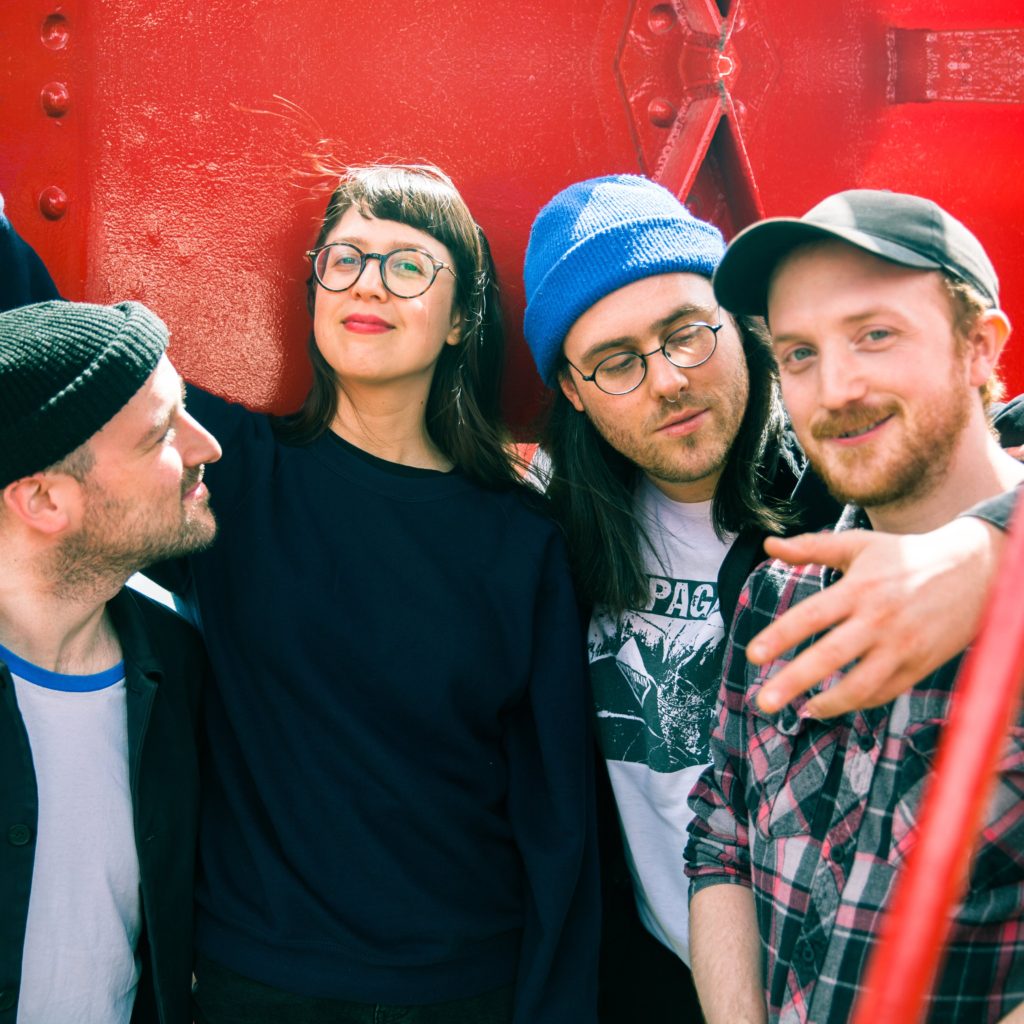
Situated at the entrance to beautiful West Wales, the city is plagued with high crime rates and drug addiction, and sits just downwind of the industrial hellscape that is Port Talbot. It’s a town that exists in a perpetual state of decline and revival, depending on who you talk to. Arising from this paradoxical stew comes the brilliant-named Only Fools & Corpses. The three-piece band take the contradictions inherent within their hometown and extrapolate them, turning ugliness into beauty and beauty back into ugliness.
The trio make punk-influenced noise rock that draws on Albini-verse bands Shellac and The Jesus Lizard, the textured aggression of Metz and the very-British sarcastic wit of Idles or even Sleaford Mods. The trio’s only releases prior to If Only A For A Minute were two singles – this year’s ‘Limping In A Green Bay’, and 2018’s sardonic masterclass ‘Support Your Local Scene’. Both were sinister, lumbering creations, crawling onto land from the toxic brew of Swansea Bay. The four tracks of If Only For A Minute are more direct and incisive – a dirty needle jab straight to the veins. ‘Lotta Bottle’ is particularly hyperactive, packed with kinetic drums and twitchy riffs, while ‘Feed The Dog For Me’ features charismatic frontman Cameron McIntyre’s most shredded vocals and some truly abrasive lyrics.

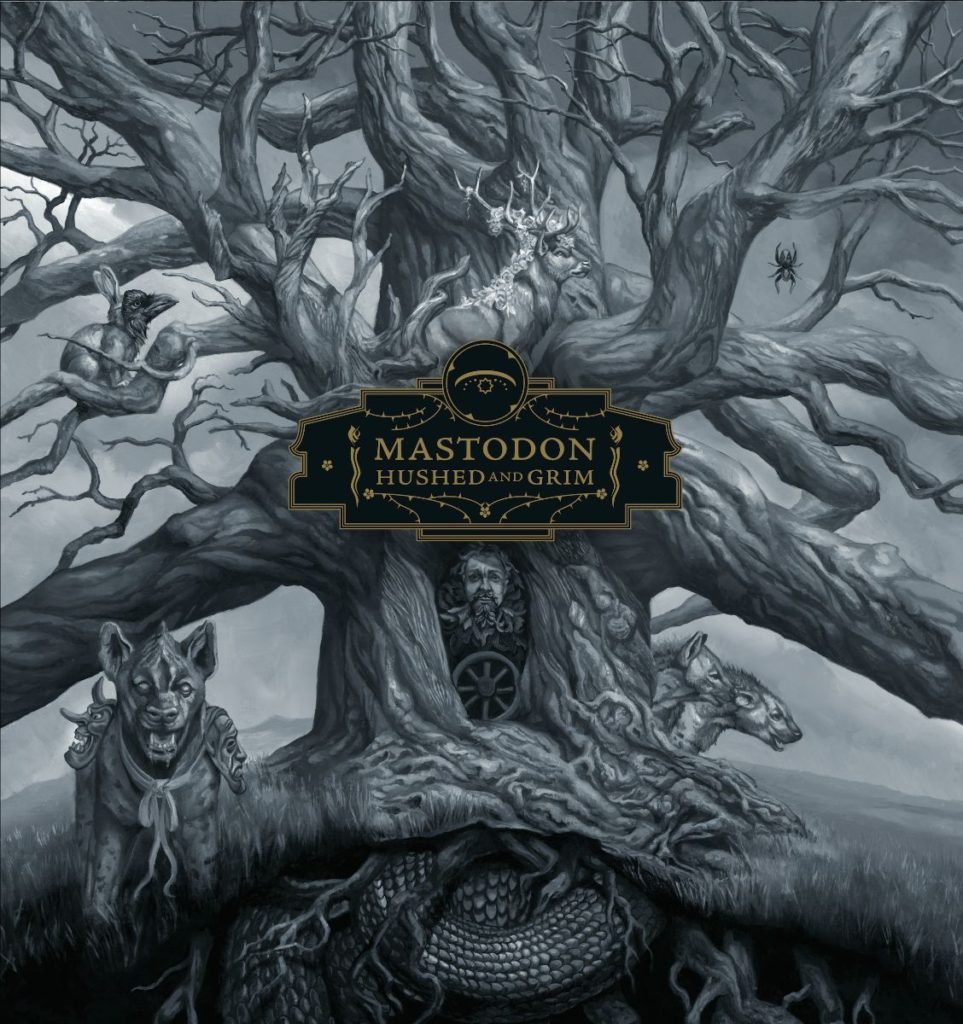
Few bands have undergone as interesting an evolution as MASTODON. From humble origins weaving towering tales about giant whales, to their modern day incarnation, they’ve evolved slowly but surely from a sludge band to arguably one of the finest progressive bands in the world with their latest album Hushed And Grim. Where Remission and Leviathan brought the heaviness in the riffs, Crack The Skye brought all this along with a hefty dose of heady progresive sensibilities, crafting a sprawling concept album. While there may have been some less-highly regarded steps since (The Hunter) they’ve retained an identity all their own. Previous album Emperor of Sand pushed ever further into their new sound and with this latest album, they deserve to take their crown as one of metal’s most exciting and vital bands.
Marking their first foray into double albums, it’s also, as many of their albums have been, sadly rooted in tragedy. Across fifteen tracks, the band eulogise their manager and long-time friend Nick John, making for a deeply cathartic, stirring listen. Opener ‘Pain With An Anchor’ declares “I turn my grief to medicine”, and if that’s not as neat an encapsulation as can be managed for such a sprawling album then nothing is. It begins with a flurry of fills courtesy of Brann Dailor, whose signature style shines across the album, striking a balance between the fill-heavy style of old and accents that serve the song. Following it is ‘The Crux’, whose serpentine guitars and odd time signature gives way to a spacious melodic break topped with the gritty tones of guitarist and vocalist Brent Hinds.
The Valley was a landmark moment in Whitechapel’s career in 2019. With emotional rawness and brutal honesty, the world caught a glimpse of the turbulent and traumatic world that vocalist Phil Bozeman was raised in, on what would be their darkest release to date. Utilising a more dynamic and diverse approach, it was this record that set a new precedent for the genre. Ever since the dust settled, the world has waited eagerly with bated breath to hear the follow up to this landmark release. In walks Kin, an even more diverse and dynamic album which pushes the band’s sound evolution into even more new territory.
Kin in someways is a sequel to The Valley. Further expanding on The Valley’s lyrical themes but from the perspective of Phil’s alternate reality/negative self and the ensuing battle that Phil fights with this shadowy figure so he can move on from his painful past. Kin also pertains to family, throughout the album Phil speaks about his parents and the pain associated with his family, as his negative self lives through his worst trauma over and over again. ‘I Will Find You’ carries on directly from ‘Doom Woods’ binding both albums inextricably, given that the band haven’t shied away from their new sound, rather they’ve fully embraced it with incredible vigour, you’re left with something truly remarkable. Recreating the initial magic of The Valley would be a daunting prospect, however Kin has its own unique magic.

Formed in Calgary in the Spring of 2016, Ravenous are a power metal 5-piece whose sound hinges on the speed-metal infused intensity of the early days of the genre. Eschewing the more Disneyfied synths and sanded down guitar tones of recent years in favour of thunderous percussion and shredding solos, second album Hubris is a musically accomplished and ambitious step for a band that are only just beginning to make a name for themselves.
‘Carnage in Carthage’ does what any good opening track should do, setting expectations for whats to come with its fast and heavy instrumentation. R.A. Voltaire‘s lavishly layered vocals immediately recall Hansi Kursch of Blind Guardian, though the frontman opts to stay in a comfortably commanding mid-range rather than reaching for glass-shattering highs. Lyrically the track recalls the likes of Sabaton, spinning a gritty tale of ancient warfare that culminates in a doomy but majestic chorus.
The next handful of tracks, including cosmically inspired lead single ‘Astral Elixir’, follow in a similar fashion. Thematically linked by the titular concept of Hubris, they offer a whistlestop tour through space, mythology and mortal combat, all punctuated by truly facemelting guitar solos. The musicianship on display throughout the album is so excellent that its possible to take it for granted within the span of just a few songs, as yet another breakneck drum beat or virtuoso lead line erupts into being. This is perhaps a consequence of the first 20 minutes or so of the album being ever so slightly one-pace, although to be fair that pace is very, very fast.


