Thrash as a genre of metal is like the shark. It’s something which has had little need to evolve over its history, only with minor adaptations here and there, making the various styling or sub-genres like the differing species of the ocean’s apex predators. This begs the question; why study it? Why talk about it? Why try to write about it? We know it’s fierce, sharp, fast-paced and SLAYER! But essentially, boiling down what thrash metal is about can be tricky at times, especially when it comes to those who have been creating walls of relentless riffs since the 1980s.
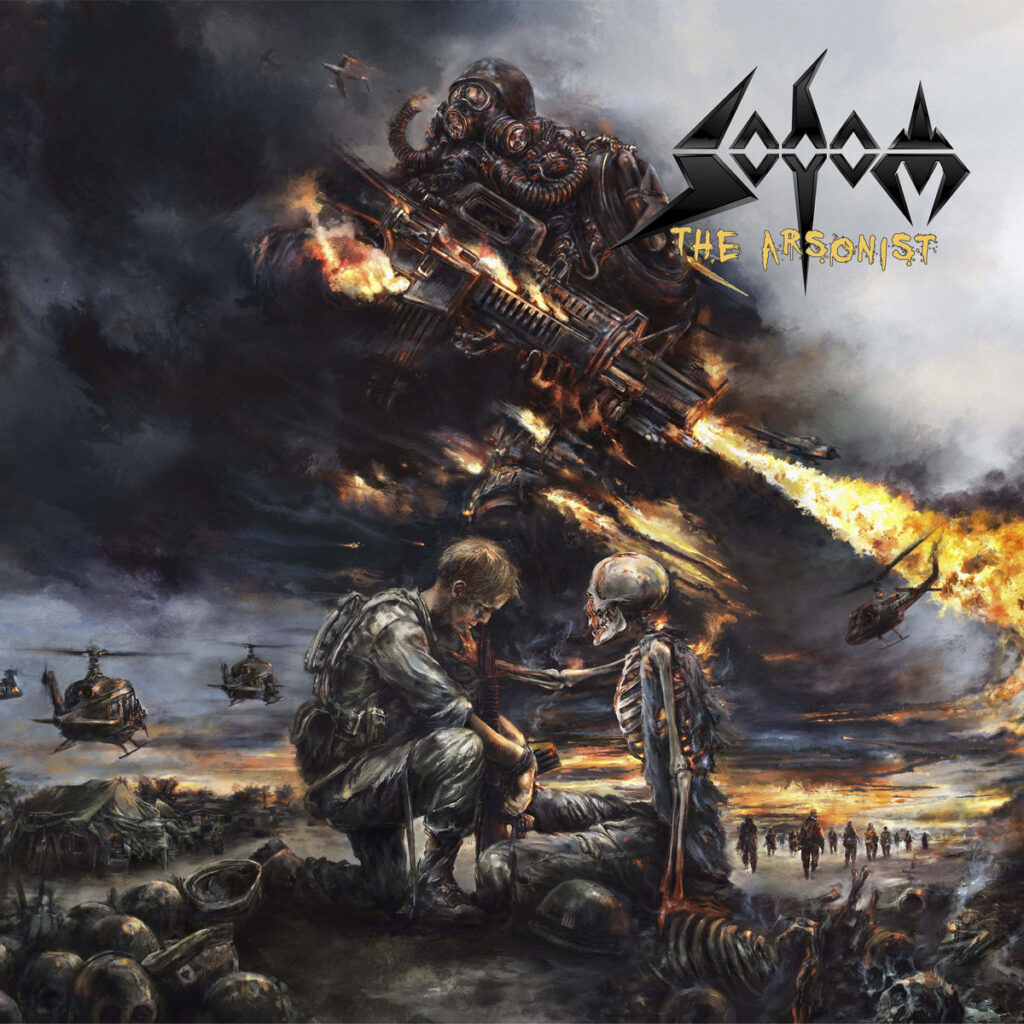
Enter one of the kings of the European Thrash scene, Teutonic Titans Sodom. Forming one part of Germany’s equivalent of the US ‘Big Four’, Sodom have been around for just as long as their transatlantic thrashers in arms and are still going strong, with The Arsonist being the band’s 16th album since their formation back in 1982. So let us pile up the kindling, douse it in fuel, make a trail and strike the match…let’s start an inferno!
If you know who Sodom are, then it will come as no surprise when this release can be rather quickly summarised as ‘more of the same’ or ‘you know what to expect’. Being one of the major influences of the early European black and death metal sound before pivoting to a mostly thrash approach which includes Agent Orange, one of the biggest and best thrash albums of all time, it should come as no surprise that the legendary four piece are a force both in the studio and on the stage.
Opening with the sample based short title track, featuring ominous samples of distorted voices, mournful melodic vocalisations, screams and tolling bells amidst the crackling of fire, it serves to pave the way for ‘Battle Of Harvest Moon’ to open the musical assault. With its big drum intro leading into the furious riffing and snarling vocals delivered with authority and a scathing edge, it is unapologetically Teutonic thrash at its finest. Sodom creates a commanding presence through the fast tempo and cutting solo work, giving the overwhelming urge to head bang.
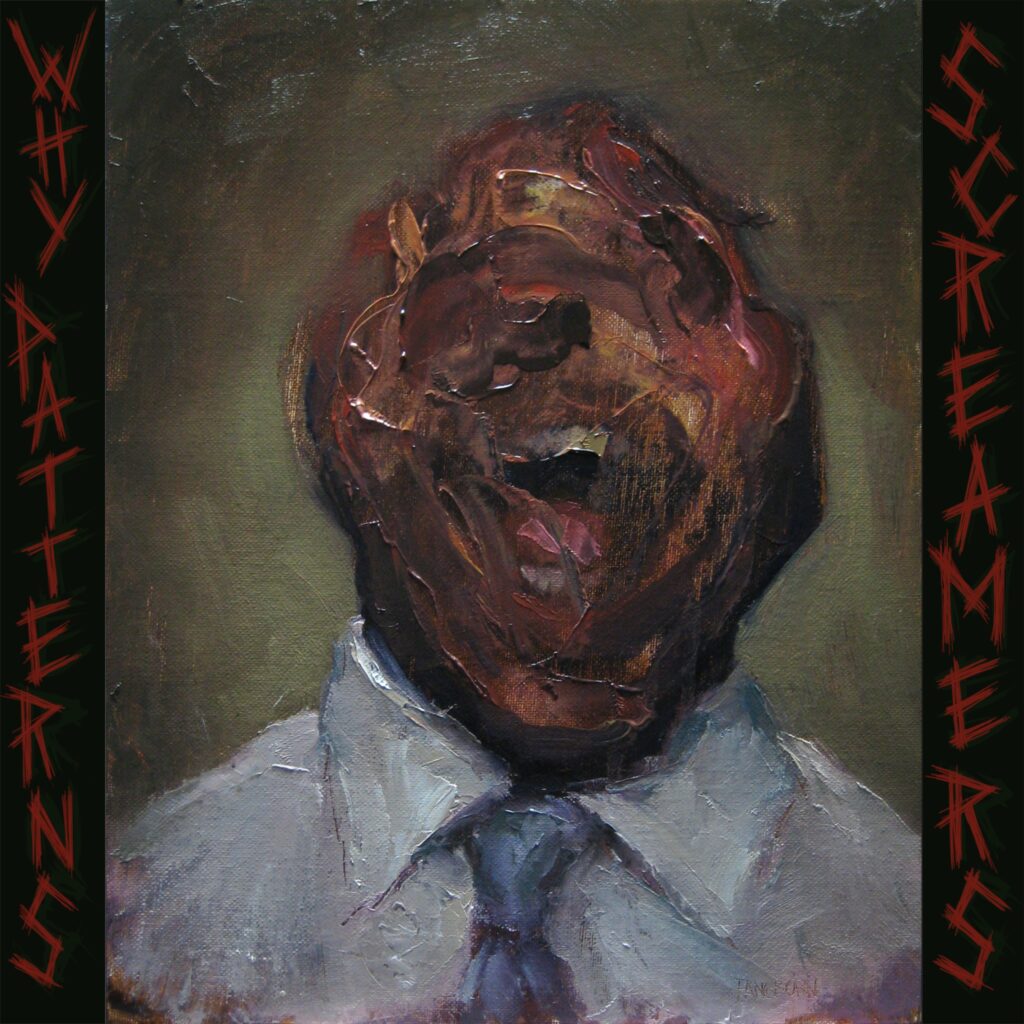
Why Patterns. These London-based purveyors of premium noise for the distinguished listener are back with their second album, the rather fittingly titled Screamers. It’s been three years since they assaulted the public’s listening holes with Regorgitorium, an album that was described as being “constructed with the sole goal of distressing and alienating their few remaining friends and family.” So where do you go from there? How do you follow up a debut like that? The answer is by taking all the best parts of that album and paring it down to the absolute essentials, rendering and distilling it till you’re left with not-quite 17 minutes of pure noise rock perfection.
It is a truth (almost) universally acknowledged that there are certain words in the English language that, when used correctly, can make (almost) anything immediately more appealing. One of those words is celestial, which is hardly surprising given that J.R.R. Tolkien himself swore that when divorced from its all too pedestrian meaning, “cellar door” is one of the most pleasing strings of syllables in the entire language. Thus, if one takes a similar sounding word and adds in all the associations with stars and the heavens, it’s no great wonder that celestial has ended up being an inherently appealing word. Marry that to a genre that already tends towards the mystical, arcane and otherworldly, and you’ve got a genre descriptor that an awful of people will take one look at and be sold. All of which would be fine if Leonov were a band that could be straightforwardly described as “celestial doom”. Thing is, there’s nothing straightforward about it.
For starters, there’s entirely too much going on here to be doom proper, and – as the old jokes go – Leonov are entirely too ready to “just play the next note already” to be straight doom by most people’s standards. Rather, this is roughly where doom, post rock, shoegaze and dark folk meet, and the end result is quite something.
Deathcore, a polarising genre to say the least, add in a massive dose of the dissonant nature of black metal, and you’re bound to turn some heads. Love it or loathe it, one thing is for certain: this sound will get people talking.
Riffs. Riffs, riffs and more riffs—that’s what this release offers up in abundance. The pounding, tight, neck-snapping groove of a classic deathcore foundation is fused with the more unhinged, chaotic styling of black metal to create something that constantly teeters between control and collapse. There’s structure here, for sure, but it often feels like the walls are shaking around it. The result is urgent, unpredictable, and consistently gripping.
Matty Matheson is a fairly recognisable figure. You might know him as an actor on the cast of The Bear, or maybe as a YouTuber, or even as the guy who makes your favourite sauce. However, his links to hardcore are rather more tenuous in mainstream knowledge, so the news that he’s now fronting a hardcore band called Pig Pen who’ve released a record on the mighty Flatspot might come as something of a surprise – it might even feel like a practical joke, a bit of a gimmick. That feeling could last for as long as you want – provided you never put on the record.
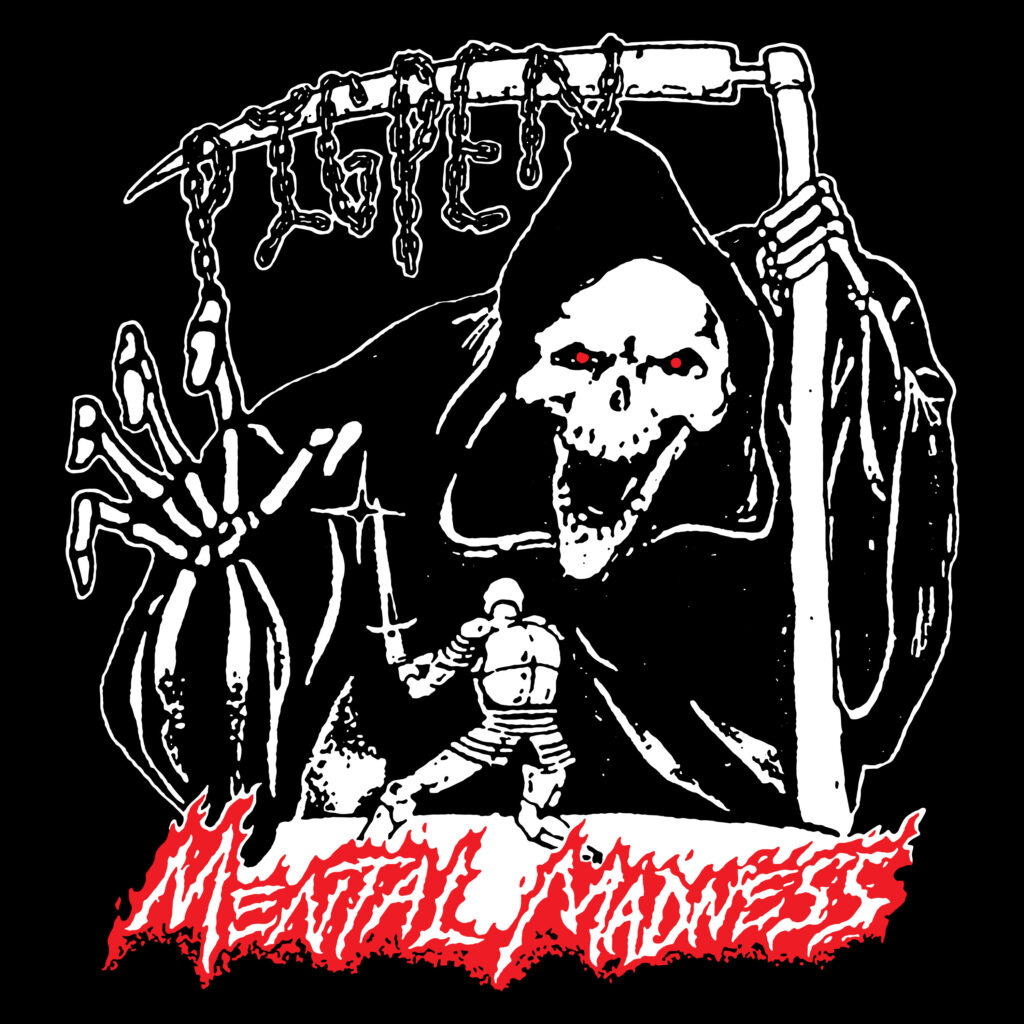
Pressing play tells you one thing almost instantly: this ain’t no joke. Mental Madness is, in fact, anything but. The entire LP obeys conventional hardcore rules – that being, songs shouldn’t ever really be anything much more than two minutes long (with one notable exception), and the whole set of ten songs comes in at a solid 24 minutes. It also sits firmly within the realms of the influences they claim – 80s hardcore soul runs deep within this album, and the cover pays testament to that fact in how ‘of that time’ it feels. The guitar tones are thick and powerful, with a nasty edge to them, whilst the drums are powerful whilst not overpowering the rest of the band. Matheson’s voice is probably the most surprising part of all though, as he genuinely has an excellent voice for this brand of hardcore, conveying anger and energy and fiery power with relative ease.
It’s been three long years since Philadelphia based five-piece Hiroe dropped their first EP Wrought. The band has spent the intervening years honing their musical craft and in that time there’s been some shuffling around inside the band with three new members joining. Now they’re back with debut album Wield, released by the fine folks at Pelagic Records. The end result is a slick, polished debut album of purely instrumental post-rock that shows off just what the band is capable of, sweeping from delicate, delicate crystalline melodies to upbeat, triumphant riffs to potent, sludgy walls of sound.
Post-rock instrumental albums can sometimes suffer from listener fatigue, when every song seems to blend into the next one and in the end you’re not entirely clear what it was you just listened to. Hiroe‘s Wield avoids this by presenting the listener with a tightly focused package of 6 songs over not-quite 46 minutes, a rather modest effort compared to some titans of the post-rock genre. The tracks are laid out so that each one is distinctly different from the one that precedes it and while it could be claimed that this album lacks that distinct sonic progression, the “journey” that listeners are taken on in some other post and prog-rock offerings, Wield offers something more immediately accessible. Not a bad shout for a band still trying to make their mark in the genre.