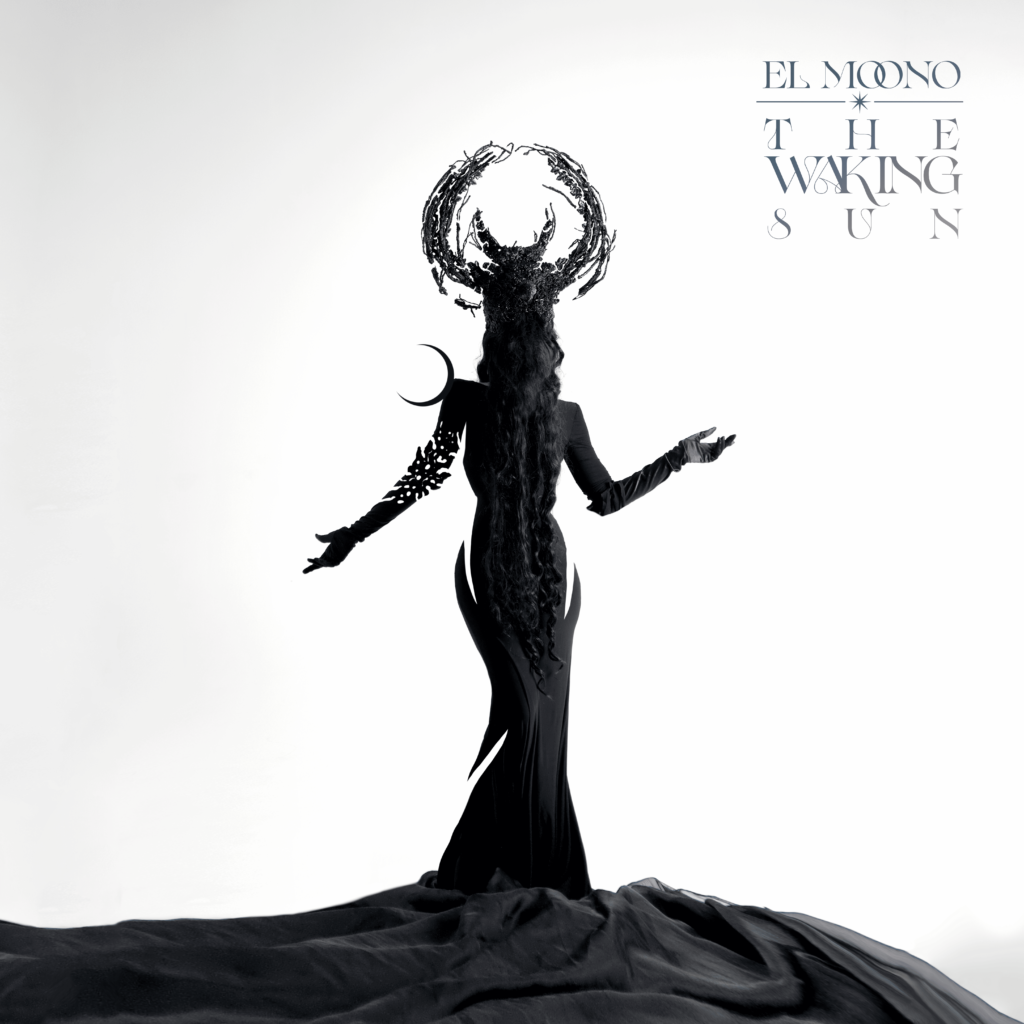
The full length debut from the Brighton-based quartet, The Waking Sun is an incredibly vivid portrayal of a day in the life of a mind plagued by years of strife. Yes, whilst many an artist in every sense of the word have committed works to documenting the inherent horrors of depression, dysmorphia and other plagues upon the psyche, it wouldn’t be hyperbolic to state that this record stands as one of the most authentic art-pieces of this nature. Some may scoff at such a lofty sentiment, but upon listening to this record one would be hard pressed to argue with such a statement.
Born forth from a lifetime of discomfort, here, El Moono use this distress as drive to step beyond their musical comfort zone to intimately seek for the kind of catharsis that can only come from years of longing for peace. There’s no reliance on stale conventions, no shoehorned gimmickry and certainly no lack of inspiration here; just the sound of bottled agony being decanted in a way that’s beyond the limited and quantifiable nature of genre. It’s intimate to a claustrophobic degree, violently tense and abrasively beautiful.
In the saturated world of indie music, it’s easy for artists to lose – or never find – their peculiar identity. Mammoth Penguins found theirs long ago, and on their latest outing Here, they continue to develop their unique style of indie rock.
How they got Here is a question of where “there” was. The band’s wonderfully titled 2019 album There’s No Fight We Can’t Both Win was an exciting step forward. Off the back of their great warm-up shows, they were ready to tour, play SXSW, and dive into writing a whole new album, but the pandemic put a big pin in any further activity. In their own words, it was “heartbreaking”. The pandemic cloud settled over the world, but true to form for a good indie band, Mammoth Penguin persevered.
Their 2019 album was bold and self-assured, but this new one would be a little different. Here doesn’t lack confidence, but it is, perhaps, more reflective due to the world’s difficult last few years. The band wrote collaboratively during quarantine and grew their songwriting skills (like jamming a song and editing it down, the source of ‘Plea for Kindness’) working remotely in the absence of studio access.
If you’re rolling your eyes at even the thought of another post-punk band joining the throngs of privately educated twenty-somethings monotonously talking over off-kilter guitar lines then have no fear, Bristol’s Knives are here to revitalise the genre while dual-wielding a saxophone and a bombastic punk attitude. Already gaining a small cult following off the back of their 2023 Newshounds EP and their phenomenal live show, Knives continue to carve out their unique identity on their sophomore EP What We See In Their Eyes.
Despite flying through only five relatively short tracks, What We See In Their Eyes delivers more interesting, fully realised musical ideas than most longer releases. Opening track ‘Happiness’ is a perfect example of what Knives are capable of, flying out the gate with back and forth shouted vocals from frontman Jay Schottlander and singer/saxophonist Maddy Hill, full of sneering attitude and raw punk energy. Knives represent an edgier, more aggressive offshoot of the modern post-punk revival, closer to bands like JOHN or Heavy Lungs than some of the genre’s bigger names who seem more focused on the “post” than the “punk”.
Along with Abigail Barlow’s Geordie accented vocals are guitarist Dave Hillier, bassist Kris Brunsden, and Dave Allen fuelling all the band’s spirited energy on drums. Their fast fury acknowledges Hot Snakes and Mannequin Pussy among their influences. But, their file under quality extends further as they also recall the much-missed Sunderland’s finest melodic Hardcore Punks Leatherface speedy drive and Brutus in their DNA.
Memorable debut albums generally burst out of the pipes with an instant pile driver of an opener, and Fast Blood do indeed raise the pulse as sparks fly on ‘Sexual Healing’ (no, not a cover of the 1970’s Marvin Gaye soul classic). Charged with female empowerment, it’s an exhilarating just over the three minutes’ mark ride. It gives off the same rush of unstoppable energy in the same vein as listening to Melbourne’s rebel rousers Amyl and the Sniffers. It will duly make you feel 21 years young, whatever your current age.
Urzah haven’t been around long, but they have been round the block a few times, chalking a swathe of post-sludge inspired gigs on their way to releasing their debut album The Scorching Gaze. They peddle a type of stoner sludge that is as eccentric as the Bristol music scene they hail from. Inspirations range far and wide, from Mastodon to Neurosis past Russian Circles and back again, Urzah really do cover the entire gamut of the metal genre.
Album opener ‘I, Empyrean’ starts up at a ferocious speed, there’s no wonder they released it as a single. The track is like a smorgasbord of Urzah’s sound, a little sprinkling of metalcore, a dash of stoner metal leads all rounded off with a healthy helping of pounding sludgey drums and side serving of post-metal ethereal cleans. The vocals sore, the drums slam, and the guitars grind their way through four minutes of intensely performed emotional music.
This vein is carried on throughout the album, it seems that Urzah’s greatest strength lies in their ability to weave a myriad of influences into a coherent behemoth, this may come from the bands approach to writing, where they have said in interview that, “we don’t really have main writers in the band. We bring ideas to the table, mess around with them, and see what happens. It really works for us, and when it clicks and forms into an actual track.” When you have so many obviously well-informed heads working together it creates a formidable beast, in fact you wouldn’t be wrong in saying this album sounds like it’s come from a band that have been working at their art for a much longer period than is reality.

Musically influenced by the then un-tapped creativity of 90’s post-rock and inspired by the feelings of solitude that comes from struggling to find one’s place in this world, Unfound see’s Winter At Sea returning to the roots of post-rock as a whole. In an age where many an act in this field are shoehorning often incompatible genre dynamics into the framework of the genre in order to discredit the notion that the genre has stagnated – a tact that often pays credence to such a sentiment in itself – Unfound see’s this band rejecting such new-age gimmickry in order to nourish the original touchstones that this genre is built upon; atmosphere, ambience and sentimentalism within the negative space. By returning to the origins of this sound and nurturing tender elements of electronics, folk and ambient negative space, Unfound presents itself as four soundscapes that could both be either solemn soliloquies or gentle lullabies at any given time.
The title track and respective opener ‘Unfound’ essentially encapsulates all of this across it’s five minute run time. Reminiscent of the more minimalist moments of genre pioneers Explosions In The Sky and MONO in thank’s to it’s sparsity and dwelling in the same oeuvre inhabited by current national scene staples such as VLMV and Aaronson due to it’s spacious albeit cohesive nature, the track carries thoughts of both ache and peace simultaneously. Across the span of the track, tranquil moonlit acoustics melodies glide alongside synth swellings that unhurriedly pass through with no quarrel. It’s somewhat ghostly, somewhat ghastly, but enteral and restrained, a fact that harkens to the primary appeal of this EP; it’s lack of immediate gratification.