There is no denying that 2023 has been a huge and exciting year for death metal with exceptional releases from Dying Fetus, Creeping Death and Tomb Mold to name a few. A high standard to follow as fans eagerly awaited the following up to their 2019 debut, The Grand Descent, but Fuming Mouth sure did follow up and they do not disappoint.
Working closely alongside Kurt Ballou of CONVERGE to help shape the record, Last Day of Sun showcases the band’s progression with their sound whilst remaining the perfect amalgamation of death metal and hardcore. Initially born as solely a concept album depicting a city in disarray as the sun is set to extinguish in 24 hours, the concept shifted to become more rooted in reality to reflect the struggles of lead singer, guitarist, and founder Mark Whelan’s diagnosis and recovery from Acute Myeloid Leukaemia.
Monstrous opening track ‘Out of Time’ rips Last Day of Sun into life, delivering powerful riffs and breakdowns evocative of Fuming Mouth at their very best. Whelans bellowing delivery of “I am out of time” at the start of the song and its echoing throughout, sets out the underlying concept of the album, encapsulating the turmoil of a city facing impending doom and the very real fear and personal struggle of battling a life-threatening illness and grappling with death.

Initially recording their debut album in February of 2022 and putting the finishing touches on production earlier this year, Ex Everything are primed and ready to unleash their pissed off vision to the world. Comprised of guitarist Jon Howell and drummer Dan Sneddon of the legendary noise act Kowloon Walled City, bassist Benjamin Thorne (Minot, Low Red Land, Tartufi) and vocalist Andre Sanabria (blowupnihilist). With such a wide array of former projects, the band themselves are the first to admit that Ex Everything is very much its own thing, with Howell clarifying “it addresses the part of us that wants to write fast, chaotic, knotty, messy, pissed off music.”.
Album opener and the band’s debut single ‘The Reduction of Human Life to an Economic Unit’ is an absolute belter. Discordant math riffs sink their hooks in, jarring rhythmic pacing and angular, destructive instrumentation seamlessly blend between each other for palpable and joyous tension. The politically charged lyricism powerfully broadcast by Andre Sanabria’s unhinged vocal performances are the cherry on top. By the time the final breakdown rolls around the band are suddenly reminiscent of the monolithic abject suffering of AMENRA.
‘Exiting the Vampire Castle’ sticks to a slightly slower pace, conjuring a hypnotic atmosphere, tom led rhythms paired with a snarling beast of a bass groove and a spoken word vocal delivery that has seething anger bubbling underneath the surface. The song builds slowly but surely as it goes along to an unhinged climax that is sure to have a live audience eating out of the palms of Ex Everything’s hands.

Despite stereotypically being a genre reserved for schlocky musings on pop culture, unhinged intoxication and slapstick ultra-violence, those who dabble in the genre often do so po-faced, insisting the sound is one reserved for aloof sincerity. Gama Bomb are a welcome respite from this.
In similar vein of Virginia party thrashers Municipal Waste, Ireland’s Gama Bomb have long offered a more cheerful take on the trash metal blueprint that leans fully into the intrinsic fun and absurdity of the genre as a whole. In fact, the band have long lampooned the stoicism and humourless approach to the genre that many of their co-instigators in the scene take. One only needs to look back upon their discography – featuring such gems as Speed Between The Lines, Survival Of The Fastest and Tales From The Grave In Space – to truly get an indication of this. Their approach has divided some, but their eighth full length BATS see’s the Gama Bomb boys further fall back on their unique leanings whilst honing their musical edges.
Produced, mixed and mastered by guitarist Domo Dixon and featuring artwork created by legendary horror designer Graham Humphreys (A Nightmare On Elm Street, Evil Dead, From Dusk Til Dawn), BATS, like it’s artwork implies, is viscerally good fun. Interlude ‘Prologue Under The Pyramids’ and opener ‘Egyptron’ – a song about a robotic Egyptian demigod genuinely voiced by guesting West Coast hip-hop pioneer Egyptian Lover – introduce and characterise BATS in a fashion in only Gama Bomb can. Driven forth by the band’s classic galloping riffing, the piercing highs of vocalist Philly Byrne and featuring a classic 1980’s hip-hop section courtesy of the pioneer aforementioned, BATS doesn’t waste any pretence on being a deathly serious offering for those gatekeepers donning ill-fitting bullet-belts. In fact, with the high-kicking speed metal of ‘Living Dead In Beverly Hills – a devilish love-song to classic late 20th century horror – consecutive, BATS is a record dedicated to the inherent tomfoolery of this genre as a whole.
What alt rock does to feel new is interesting. The Arctic Monkeys went lounge act last year. Fall Out Boy are deciding between mediocre pop and mediocre rock (old man yells at clouds). Lonely the Brave, in comparison, refuse to settle for laurel-lolling or middling music. On their fourth album, What We Do To Feel, the Cambridge five-piece pull their new vocalist Jack Bennett deeper into the fold and hone their sound further.
Lonely the Brave identify Springsteen, Deftones, and Pearl Jam as a few of their influences. Disparate sources, to be sure, but welcome ones. This record continues to pull from all three of those artists, as well as a few implicit sources. One source Jack Bennett seems to pull from is evident from the first song, ‘Long Way’. Bennett replaced original vocalist Dave Jakes in time for their 2021 album, and he brings some Chris Carrabba heart. Bennett’s gritty, emotive vocals, like chalk for the hands, keep the song from slipping into the background. Throughout the remaining nine tracks, he provides the anthemic vocals the band need to challenge the hefty guitars. The grunge influence is evident in Bennett’s delivery. He seems to dig the Vedder style, sometimes a little too much – he indulges in a little mumbling on tracks like ‘Victim’, but these instances are few. The quiet moments he has, like those on ‘Unseen’, are exquisitely tender. Bennett sounds more at home here among his bandmates than on the last album, his first with them.
Most of the tracklist feels intentional, so the album speeds by with little effort. ‘The Lens’ is a big track and surefire favorite. The fourth song, ‘Victim’, feels like a comforting weighted blanket. ‘Colour Me Sad’, track five, lives up to its title with a poignant opening riff. It’s an elegant track that ends with piercing strings in a lovely outro. A perfectly placed album interlude lets the listener space out for a moment.

Many metalcore bands find themselves down a dead end after two or three albums and will try their hand at reaching for a more accessible sound, leading existing fans to become disillusioned. Fans of Silent Planet who have been around since The Night God Slept have never been dealt such a hand, as the band’s subtle and incremental introduction of new influences is done to astonishing effect.
Gentle pulses and ambient swells greet you at the door of this album, but once open it’s oblivion that awaits. You can hear the influence in the mix immediately from Buster Odeholm of Humanity’s Last Breath / Vildhjarta and it marries beautifully a sound that has shot to prominence in recent years with the signature Silent Planet palette. Daniel Braunstein’s production has given it a sheen and quality and shades of Spiritbox are felt throughout ‘Offworlder’ and it carries a sincerity and a Volumes-like seasoning of djent to groove and allow it to express itself to the fullest.
Garrett Russell’s confidence exudes throughout every word and the development in his singing is to be commended and celebrated. In all areas he adds new elements to his already formidable presence as his crushing lows play a more prominent role, cementing him as one of modern metalcore]s most dynamic frontmen.
The graceful simplicity with which ‘Antimatter’ flutters sets it apart as one of the highlights of the album, a piece of their process dealing with a traumatic van crash, of which the album is released on its first anniversary. The sparseness of Mitchell Stark’s riff leaves ominous synths to fill the void making it poignant and all the more pulverising when Garrett howls “we are broken bodies built for each other’.

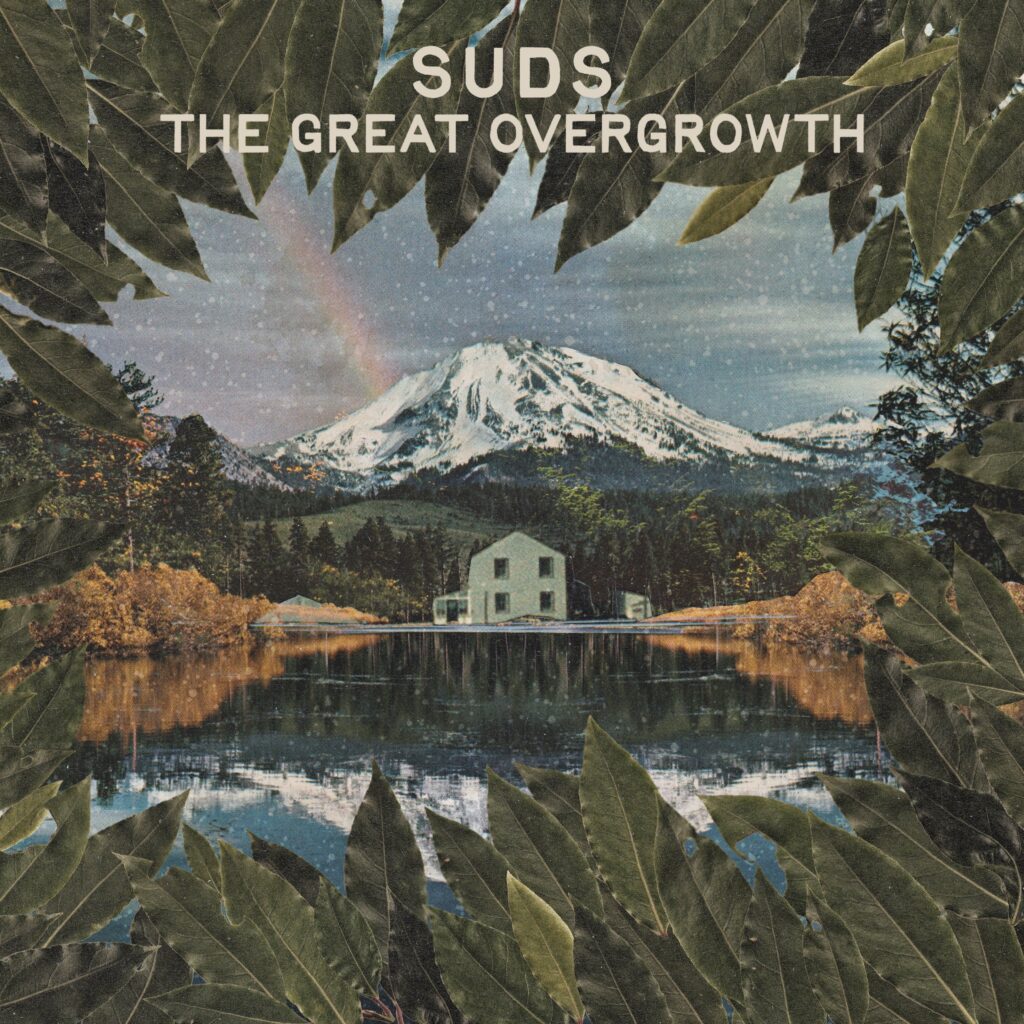
The debut full length from the indie-emo stalwarts, The Great Overgrowth serves as the thematic followup to their 2022 EP In The Undergrowth. As those who heard this brilliant EP shall know, the record is a collection of songs that document the frustration, anxiety and ceaseless exhaustion of being entangled in chaos of mental turmoil and the perpetual movement of modern life. The Great Overgrowth, however, is a more cultivated and free-spirited body of work. Articulated with the emotional vulnerability of modern emo marred with the wistfulness of tender indie, The Great Overgrowth see’s SUDS escape from the darkness of the mental thicket to embrace the pine-scented freedom of the open world. Stray vines and brambles may be still wrapped around their limbs as they stride towards the light, but with it’s swelling optimism and brooding melodies, The Great Overgrowth is a charming, soothing and wholly comforting release.
This sense of optimism doesn’t result in a total change of sound however. ‘A Terrible Thing’, the album’s opener, is a natural continuation of the pensive emotion found within SUDS’ 2022 effort, albeit with a more unshackled sound that becomes vividly wonderful with the track’s swelling conclusion. The following likes of ‘Changing’ bares further credence to this, with the buoyant melodies and the calming croons of vocalist Maisie Cater giving the track a brilliant aerobatic quality that infuses it with a sense of rejuvenated energy. In fact, with it’s lyrical content exploring the constant state of flux we are all in as we progress through life, the track is a brilliant and inviting encapsulation of SUDS as collective creative and The Great Overgrowth as a whole.