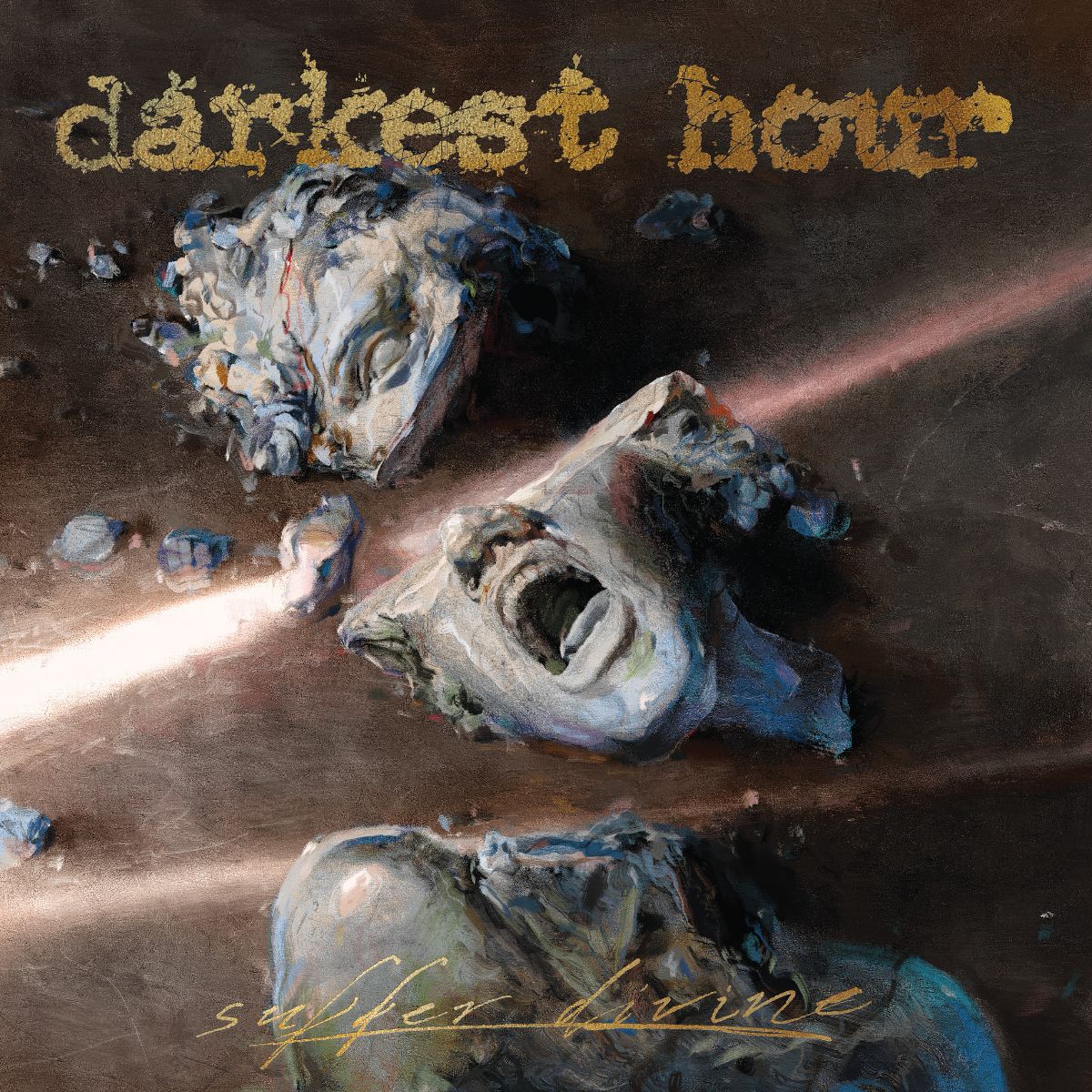
Eleven albums in, Darkest Hour remain ferocious, melodic and unmistakably themselves. Suffer Divine takes time to peak, but its strongest moments prove there is still plenty of life left here.
Eleven albums in, Darkest Hour have very little left to prove, but Suffer Divine still sounds like a band with something to chase. Following 2024’s Perpetual | Terminal, the Washington D.C. veterans return with a record that is heavier, sharper and more direct, dragging the melody back into the guitars without losing the urgency that has always made them so effective.
The opening stretch does its job without immediately showing the album’s full hand. ‘All Cruelty Springs From Weakness’ acts as a brief, hostile introduction before ‘Gods Of Decay’ crashes in with rapid riffs and controlled chaos. ‘No Conquered Hearts’ and ‘Salvation’ keep that momentum moving, with the latter opening the sound out just enough to stop the first half becoming one long sprint. The title track is a compact burst of aggression, while ‘Warrior’ takes a steadier route and gives the guitar work more room to breathe. ‘Vile Angel’ darkens things further, but there is still a sense that Darkest Hour are playing firmly to their strengths rather than really pushing at them.
None of this makes the first half weak, but Suffer Divine becomes noticeably more compelling the deeper it goes. The early tracks establish the record’s weight, pace and familiar melodic language; the second half is where those ideas begin to stretch, twist and leave a much stronger impression.
“Suffer Divine becomes noticeably more compelling the deeper it goes.”
‘The Unforgiving Hand’ is where Suffer Divine really starts to open up. Its extended instrumental introduction gives the guitars room to breathe, leaning closer to classic heavy metal than straightforward metalcore before the full band crashes back in. It is melodic, dramatic and unusually patient, which makes the eventual eruption hit even harder. Better still is the way it falls into ‘Tribalist’, easily one of the most satisfying transitions on the album. The contrast between the two tracks gives the back half an immediate sense of movement and makes this stretch feel far more adventurous than the opening songs.
From there, ‘Everyday Horrors’ delivers what may be the best riffs on the record. The drums punch through the opening before the guitars take over with vicious, tightly wound lines that feel purpose-built for a live room. It is the sort of track that shows how naturally Darkest Hour can move between melodic death metal precision and metalcore aggression without sounding like they are forcing either side of themselves into place.
A huge amount of that impact comes from the production. The mix is impeccable, giving every instrument space to land without sacrificing any weight. The guitars are crisp enough for the melodic detail to shine through, while the rhythm section still hits hard enough to keep everything grounded. Even when the arrangements become dense, nothing disappears underneath them. Suffer Divine is polished without becoming sterile, which is exactly the balance a record this busy needs.
That clarity also underlines just how broad Darkest Hour’s sound still is. There is thrash in the attack, hardcore in the pacing, melodic death metal running through the guitars and the unmistakable metalcore DNA that has followed them for decades. Rather than sounding caught between styles, Suffer Divine lets those influences pile into each other until arguing over exactly what genre Darkest Hour belongs to starts to feel beside the point.
“The mix is impeccable, giving every instrument space to land without sacrificing any weight.”
Closing track ‘A Story Of Redemption’ brings that argument into focus. At nearly seven minutes, it is the album’s most expansive statement, with harmonies that pull strongly towards the Deliver Us era and an almost Iron Maiden-like sense of melody. For long-time listeners, that familiarity is immediate, but it never feels like a cheap attempt to recreate an older record. These ideas belong to Darkest Hour because they helped build them in the first place.
That familiarity is both Suffer Divine’s greatest strength and the source of its only real weakness. The first half is consistently solid and occasionally excellent, but the album takes time to reveal the songs that really separate it from the rest of the band’s catalogue. Once ‘The Unforgiving Hand’ arrives, the quality rises sharply. ‘Tribalist’, ‘Everyday Horrors’ and ‘A Story Of Redemption’ create a closing run far stronger than the opening initially promises, and they are the moments most likely to drag listeners straight back for another play.
For a band this deep into its career, there would be nothing surprising about coasting on instinct. Suffer Divine does not. It understands exactly what Darkest Hour are good at, but its best moments come when that familiarity is given enough space to stretch, twist and breathe.
The uneven opening keeps Suffer Divine from feeling essential front to back, but the second half is strong enough to change the shape of the record completely. By the time ‘A Story Of Redemption’ lands, it has moved from solid to genuinely memorable. Darkest Hour are not reinventing themselves here. They are doing something harder: finding fresh tension inside a sound that should, by now, be completely familiar.