
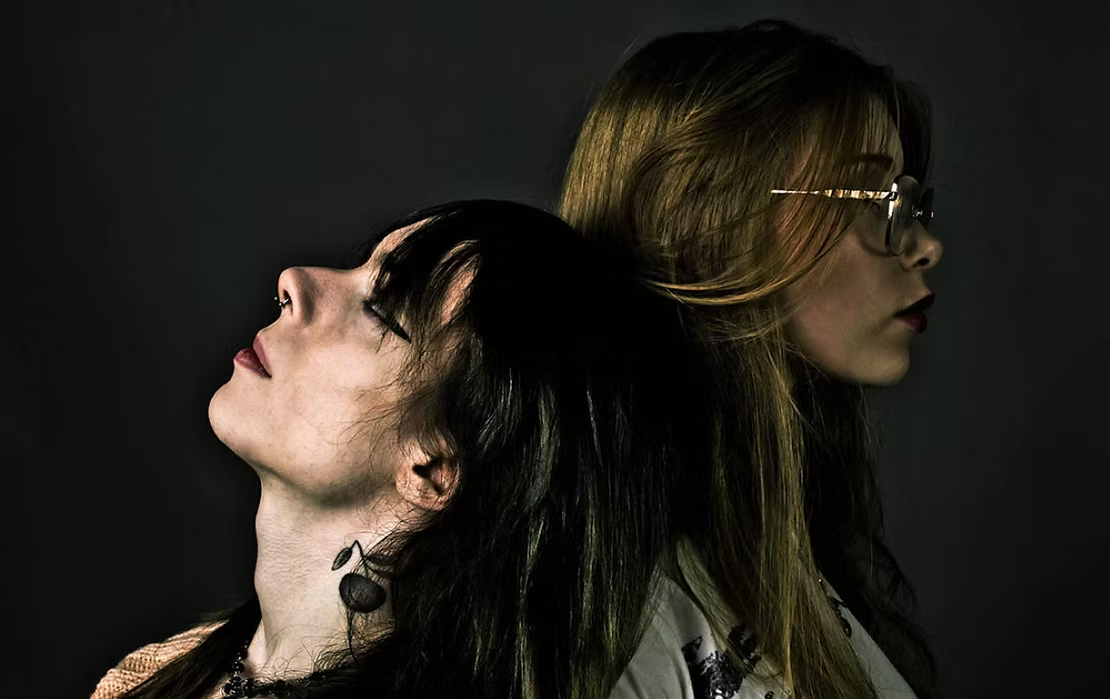
 Jasmine Longhurst
How did you two meet?
Margot: We met through our parents – our brothers played for the same football team, and we bonded over our hatred of going out on rainy Sundays to watch them play.
Katie: My mum put an ad out on Facebook saying, ‘My daughter sings, needs a guitarist,’ and weirdly everyone in Northamptonshire is connected because your mum taught at my primary school, and I was also mates-ish with [Margot’s] sister as well. Conveniently, I called up to your gaff and realised you lived in the garden.
Margot: Yeah, at the time I lived in a shed in the garden, which was wonderful. I had also just gotten sober at the time, so I was a husk of a human being. I was in pyjamas, and I said, ‘Hey, let’s record; let’s make some songs.’
How did The Wot Now start?
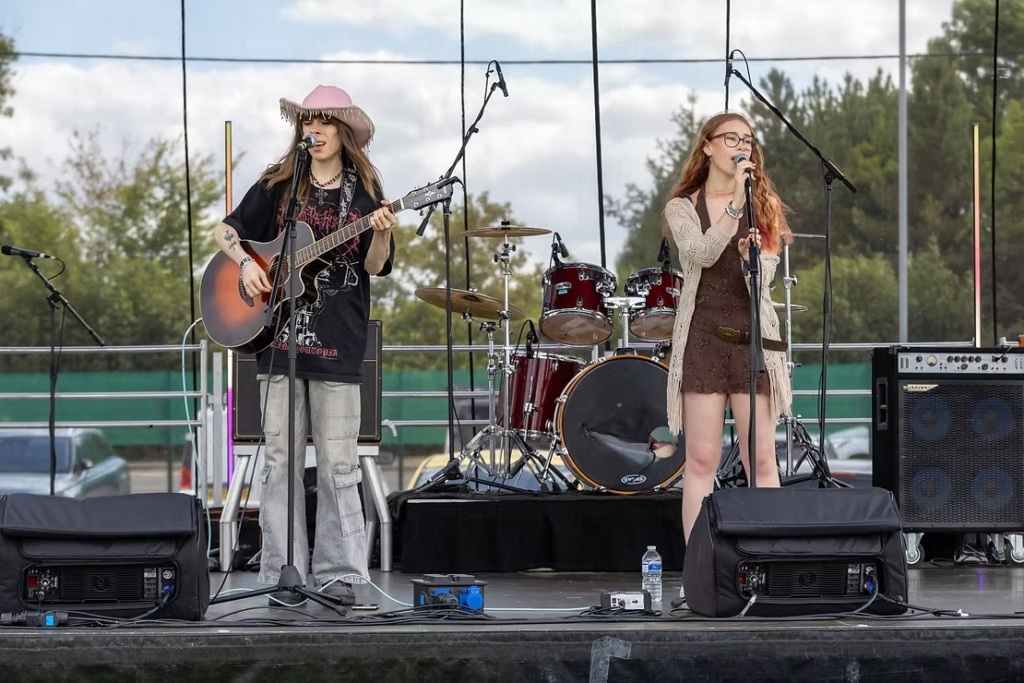
Katie: It started out as learning lots of covers, and we did that for a couple of gigs that we had in February. We had one up in Towcester, which was a decent turnout, and we had some very interesting dancers.
Margot: Very interesting dances for sure; there were a lot of middle-aged women in leopard print dresses dancing along to the covers, so I had a great time.
Katie: Then it came to March, and we were in a bit of a roadblock; we were just doing covers – which is great because it gets us a little money – but that’s not really for us.
Margot: No, and we realised that we both had similar structures and similar ideas when it came to writing, and we thought we’ll go ahead and do it, but we had to make a pact early on that if we were going to write together, it had to be honest, and it had to be viscerally uncomfortable at times, no matter what, it just had to be honest.
Katie: Yeah, I think we’re very much, like, handshake, no bullshit, or something like that. Exactly. Something along those lines.
How did you develop from there?
Margot: Well, Out of Time was the first, right?
Katie: No, it was that Starting Over Again, you had to move out, and I was coming out of the depths of an illness.
Margot: So we wrote a song – half a song – called Starting Over Again, which became the catalyst for more. It was this cool, alternative, Midwest emo-y guitar with these electronic elements. It didn’t go anywhere, but we…
Katie: It always sits at the back of my mind.
Margot: It does. And that’s what started our ethos going forwards of ‘okay, our music is for people that are going through changes, people coming into adulthood’, and this kind of thing. Because no one tells you you’re going to be all right, and if no one’s going to tell you, it may as well be us telling you you’re going to be all right, and you’re going to survive.
If Out of Time wasn’t the first song you wrote, why is it the first you’re releasing?
Margot: It’s our favourite.
Katie: It’s definitely our favourite. At the time we wrote it, it meant a lot to me. For me, it was very much a confidence booster of getting back in the swing of things because I hadn’t been singing or performing for nearly half a year. I’d just completely fallen out of love with performing. I was at a really low point in life, and I’d met Margot, started doing covers, and finally getting my spark back. And when we wrote that song, I felt like, ‘I’m going to be okay. I’m going to be fine.’
Margot: Similarly for me, coming out of the depths of brutal alcoholism and coming back from living in Liverpool, I’d come back and really, again, had to start over again from scratch. And I thought, Well, this is it. I guess I’m going to be working some shitty day job in fucking retail or hospitality for the rest of my life. And then this came along and reminded me that no, you’ll be fine. You just need to start writing again; you’re going to be fine. Stop being so dramatic; you’re fine.
Katie: It was just so nice to finally meet someone that’s always on the same wavelength.
Margot: Whatever’s wrong with us, it’s the same thing.
Talk us through the nostalgic sound and lyrics of the song. Where did the inspiration for that come from?
Katie: I recently lost contact with a childhood best friend, and I didn’t know how to reach out to her. So we started writing, and for me, it resulted in having to acknowledge the fact that we’ve both grown up. We’re not the same people that we were when we were eight years old. And longing for that childishness back, to be able to sit and play barbies rather than ‘How’s your mum? Yeah, she’s good. How’s your dad? Yeah, he’s all right.’ And that is the extent of the conversation.
Margot: Even when the song was in its little disgusting foetus infancy, it still had the same themes, talking about how you can’t replace that feeling of when you were younger; you really can never go home again. But you can visit. And even the original lyrics to the chorus, which sounded like a nursery rhyme, were “No one knows me like you do; what a waste replacing you.”
What about your musical inspiration?
Margot: We come from different worlds, really. In the beginning, I was always a pop punk and emo kid with some hardcore, a bit of metalcore here and there, but really pop punk and emo. And you came from, like, classically trained musical theatre land.
Katie: I grew up with the likes of Mazzy Star and Fleetwood Mac and hated your dad’s taste in music and then growing to actually love it, and your dad goes, ‘I told you so!’
Margot: But it weirdly works because, something I’ve said before, emo and musical theatre are the same genre, they just have different instrumentations.
Katie: Gerard Way is the exact depiction of both in one.
Margot: So then if you take that and put a folky guitar there, suddenly you’ve got this genre that’s asking is this emo, is it musical theatre, is it folk? What are we doing?
What do you want to represent to listeners?
Margot: I think our ethos has always just been, again, this idea of, look, whether you’re going through a big life change, for the majority of people, I think, that listen to our stuff, it’s growing into adulthood, and, you know, there’s no manual for that and no map, and I think it’s just the first impression. I mean, I just want it to be, ‘Hey, you’re not alone.’
Katie: Yeah, you’re going to be fine. Trust the process almost.
Margot: You’re going to chew glass for a while, but it’ll be okay.
What’s the best bit of being in a band together?
Katie: I don’t think I’ve ever met someone who can make such an absurd joke and absolutely run with it. It will be referenced not just months, but probably years, later.
Margot: I think we both have similar humour styles where you can’t sit outside the joke and point at it and observe it and go, oh, isn’t that absurd? No, you’ve got to commit; you’ve got to commit. And you cannot deviate from it, to the point where we don’t even know if we’re joking. Such a deeply unserious band, but I think it’s so important because the shit we write about is, generally speaking, pretty heavy.
Katie: It’s nice to almost disconnect from that and just be a little bit unserious. And it’s nice to remind ourselves that we are still people at the end of the day.
Is there anything else you’d like to add?
Margot: We’re in a big conflict at the minute against AI slop. I would encourage all of your readers to do nasty things to data centres and stream real artists.