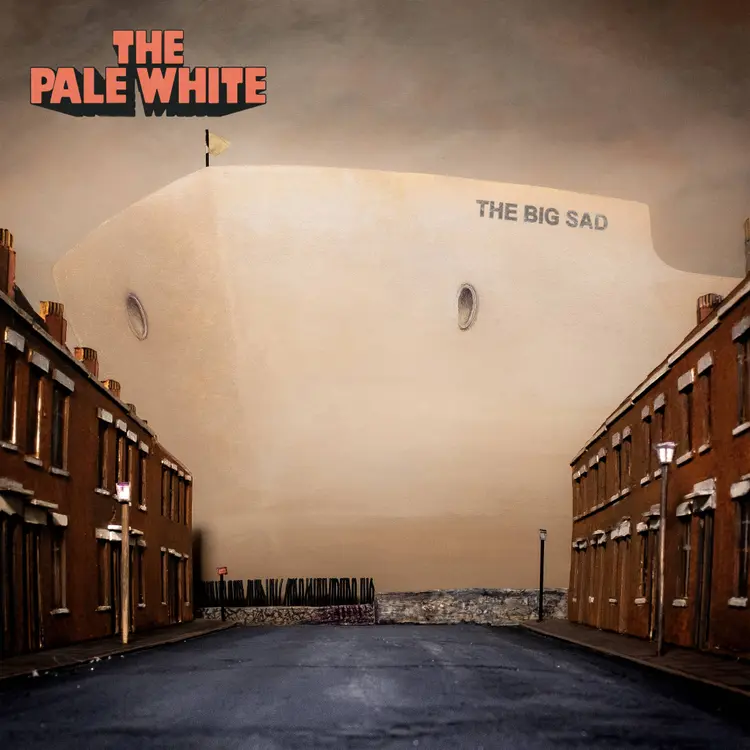
Toeing the line between retention and reinvention of their sound, Newcastle trio The Pale White return with sophomore album The Big Sad in a raw and resonant display of alternative rock.
The second album poses the dreaded question to every artist: stick to what you know, or dare to reinvent? In the four years since their debut Infinite Pleasure, The Pale White have had a considerable stretch of time to ponder exactly this. Sophomore offering The Big Sad features their characteristic brand of fuzzy, alternative rock interspersed with candid vulnerability shaped by the longing, stillness and reflection of the pandemic. Having shed their record label in a concerted effort to prioritise creative freedom and authenticity, The Big Sad was self-produced in the familiar comfort of their hometown and has a notable sonic shift that may take existing fans by surprise.
Docked at a recreation of the famous Wallsend shipyard in their hometown, the enormous and all-consuming ship on the album’s cover is the perfect embodiment of the sorrow looming between the hopefulness amongst the tracklist. Opening with lead single ‘Lost In The Moment’, atmospheric guitar chords build tension as singer, songwriter and guitarist Adam Hope’s soft vocals creep in and crescendo to a belt alongside riffs built for echoing around the walls of an arena. Though they’re some distance away from arena headliner status, an extensive European tour circuit in support of American alternative rock giants Pixies over the last year has allowed them to crowd-test the single in the venues it’s worthy of.
There’s courage in the lyrical honestly on The Big Sad, Hope’s tangibly vulnerable vocals comparable to Michael Stipe of R.E.M or Blue Oyster Cult’s Buck Dharma and laden with the forlorn hindsight of a man wise beyond his years. Tales of petty arguments and being blinded to your wrongs by pride are dreamily recounted on ‘Final Exit’, a Britpop breakup song capturing the hazy nostalgia of heavy hitters of the genre Suede. Tender, acoustic track ‘January, Please’ pleads for relatable respite from the unrelenting depression of winter and like sun shining through the parted clouds on the first day of spring, the track blossoms into a more upbeat jazz sound midway through. The album’s spirit of rising from rather than succumbing to the woe embedded within it is best captured here, rather than following track ‘Preparing For The Big Sad’ which drifts into dreariness and forms both the emotional and critical low point of the tracklist.
Yet this is an album that’s resistant in the face of it all. With shrieking synths that demand attention, the gravitas of The Pale White’s musicianship is most evident on ‘Nostradamus’, a fuzzy bassline and sweeping high vocals combining in a full-bodied rock song that’s a clear album standout. It’s easy to imagine a crowd of hands clapping in unison during the bridge, perfectly placed to slow the pace and maximise the payoff of the outro. Their strengths are undeniably in this style of resonant rock. The haunting bass, accented drumming and atmospheric vocals of ‘There’s An Echo’ combine so well it’s hard to believe this isn’t a classic from a much more established act. They know exactly when to draw on the influence of the greats before them, the angst and distorted fuzz of slow-creeping guitars on ‘I’m Sorry (This Time)’ reminiscent of grunge giants Alice In Chains, harmonies on the bridge echoing the melancholy melodies of iconic ‘The Rooster’. Titular closer ‘The Big Sad’ forms a thematically fitting end to the album with a sombre and grandiose instrumental, but the delivery feels underwhelming following the one two punch of ‘Nostradamus’ and ‘My Abacus’, a love song that’s not too far off Catfish and the Bottlemen instrumentally.
Ultimately, despite some bumps in the road The Pale White’s bold decision to abandon their record label to diversify their sound just manages to pay off here. The tracklist suggests there’s still some fine-tuning to be done before their less riff-heavy, emotionally intimate tracks can compete with their signature style of alternative rock, but if the confidence and consideration in their approach is anything to go by, then it’s comfortably within their reach for the future.