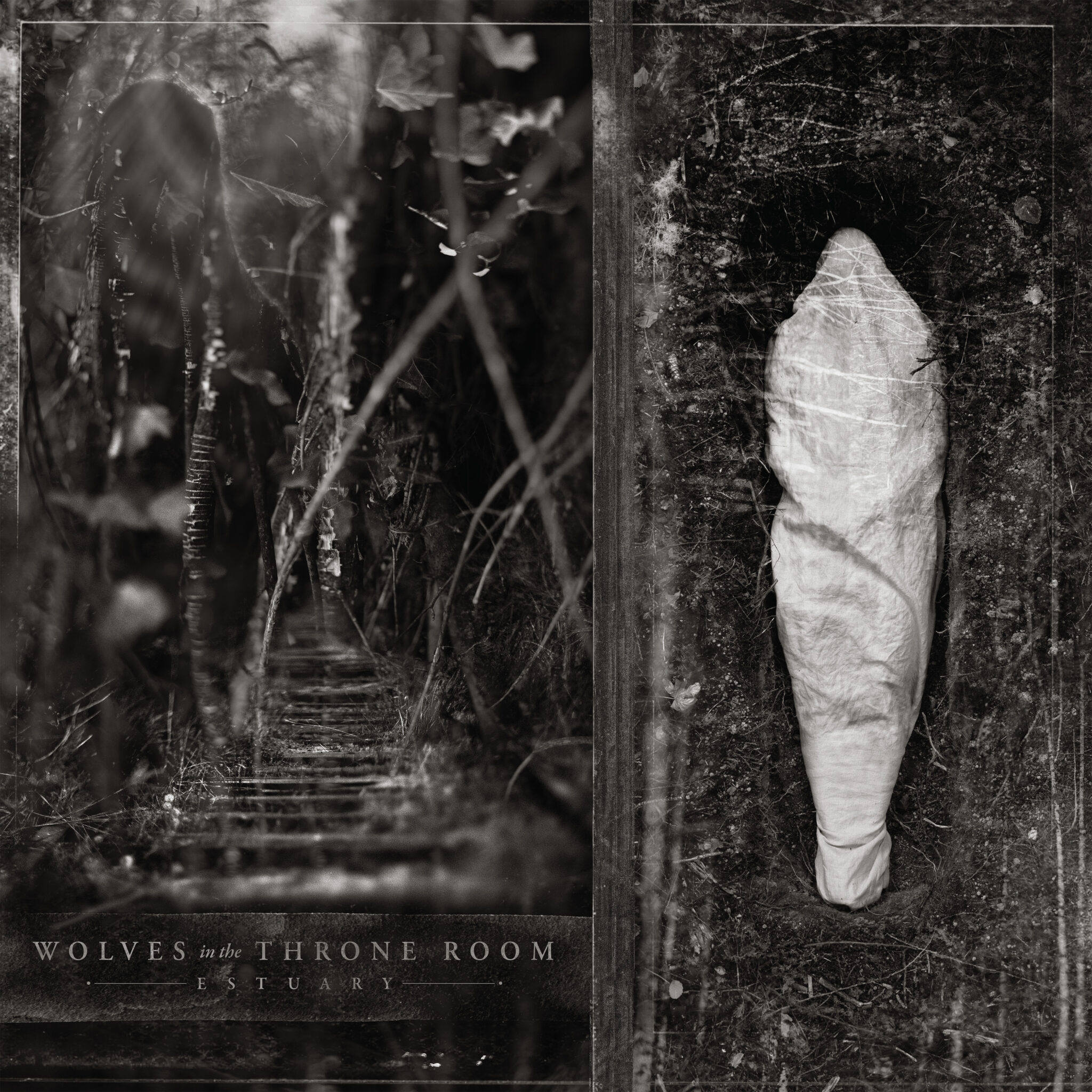
The wilds of the Pacific Northwest are calling once again. Familiar themes with less familiar surroundings, the sound of the natural world taking over being pushed to its greatest moments yet.
Grand, majestic, epic, words thrown around so often in the worlds of black metal, yet rarely can they be captured on the scale of what Wolves In The Throne Room have delivered on their latest release Estuary. For two decades WITTR have been plying their trade, dedicated to pushing their unique brand of atmospheric black metal, centred around nature and the mystical, combined with ambient soundscapes, as far as they can. Ultimately they have held the torch, both literally and metaphorically for the United States as a force in the black metal scene, and have grown into a monumental presence, proving it doesn’t have to be Norwegian to be good.
Estuary stands as the pinnacle of what atmospheric black metal can be, and of what WITTR have been able to do with their sound. From its very opening moments, the title track has an eerie, ambient build, a gloomy doom-filled riff, gently rising until it completely crashes down and collapses like a waterfall, cascading down a cliff face, washing over you. There’s so much going on, the rumble of the blast beats acting as a foundation for which everything else rises and soars over, the moody tension getting thicker with every second.
The earthy grimness we have come to expect from WITTR is there in full force, but there’s a starker , cold, industrial and mechanised undercurrent to the ambience, fitting the journey 1,000 years into the future, to the dystopian horrorscape of haunted ruins and hideous mutants, as described by the band themselves. This is never more prevalent than in ‘Foretold in Reflections’, the harsh manufactured cacophony juxtaposing the beautiful, but arguably more dangerous natural susurrus, slowly, always moving to reclaim the world.
It’s this contrast that makes Estuary such a fascinating listen. There is an almost constant struggle between the organic and the artificial. The cold, yet somehow warming, comforting, traditional black metal melodies of the natural world that envelop you, fighting against the lifeless, mechanical remnants of a civilisation long since dead. Yet neither feels entirely victorious. Instead they exist together, creating something both hauntingly beautiful and deeply unsettling, a world where humanity has become little more than a distant memory. We are here, but the world is no longer ours. The remains of the machines and technology we had, serving as nothing but a monument to our failure, and the complete indifference of the universe to our plight.
‘Knights of Tiamat’ brings a different kind of ferocity, its thunderous percussion and soaring guitars creating an overwhelming wall of sound. The riffs twist and surge, the blast beats battering away beneath them, whilst strange electronic textures lurk around the edges. It’s an extraordinary display of how to create something so vast without sacrificing the aggression at the heart of black metal.
Beneath all this soaring grandeur is an absolutely monstrous low end, giving the whole thing an almost physical presence. Galen Baudhuin’s bass work adds a depth and weight that feels as though it’s rising from the earth itself, a deep, subterranean rumble that shakes the foundations upon which everything else is built. Alongside Aaron Weaver’s thunderous drumming, it creates something truly colossal, allowing the guitars to ascend into the heavens whilst the rhythm section drags you back down into the dirt. It’s not simply heaviness for the sake of it, it’s the sound of the earth shifting beneath your feet, the slow, unstoppable movement of something far greater than yourself.
What makes this all the more satisfying is the patience displayed throughout. WITTR understand that atmosphere cannot simply be forced into existence, it needs time to grow, to breathe, to develop into something greater. ‘Ghosts Among The Obelisks’ demonstrates this wonderfully, the shifts between suffocating heaviness and moments of relative calm feeling less like traditional songwriting and more like the changing of the seasons. Nothing remains still for long, and even in the quieter moments there is a sense that something enormous is waiting to emerge.
There is something spiritual about the whole experience, not necessarily in a religious sense, but in the way it reduces the listener to something utterly insignificant against the enormity of the world around them. The music doesn’t simply describe this post-human landscape, it places you within it, surrounded by the ruins of everything once considered permanent, whilst the natural world continues entirely indifferent to what has been lost.
And perhaps that is the greatest achievement of Estuary. Wolves In The Throne Room have taken everything that made their music so captivating in the first place and expanded it into something genuinely extraordinary. This is not simply black metal inspired by nature, this is the sound of nature itself, beautiful, terrifying, merciless and utterly unstoppable. A monumental achievement from a band who, even after two decades, continue to demonstrate just how powerful atmospheric black metal can be.