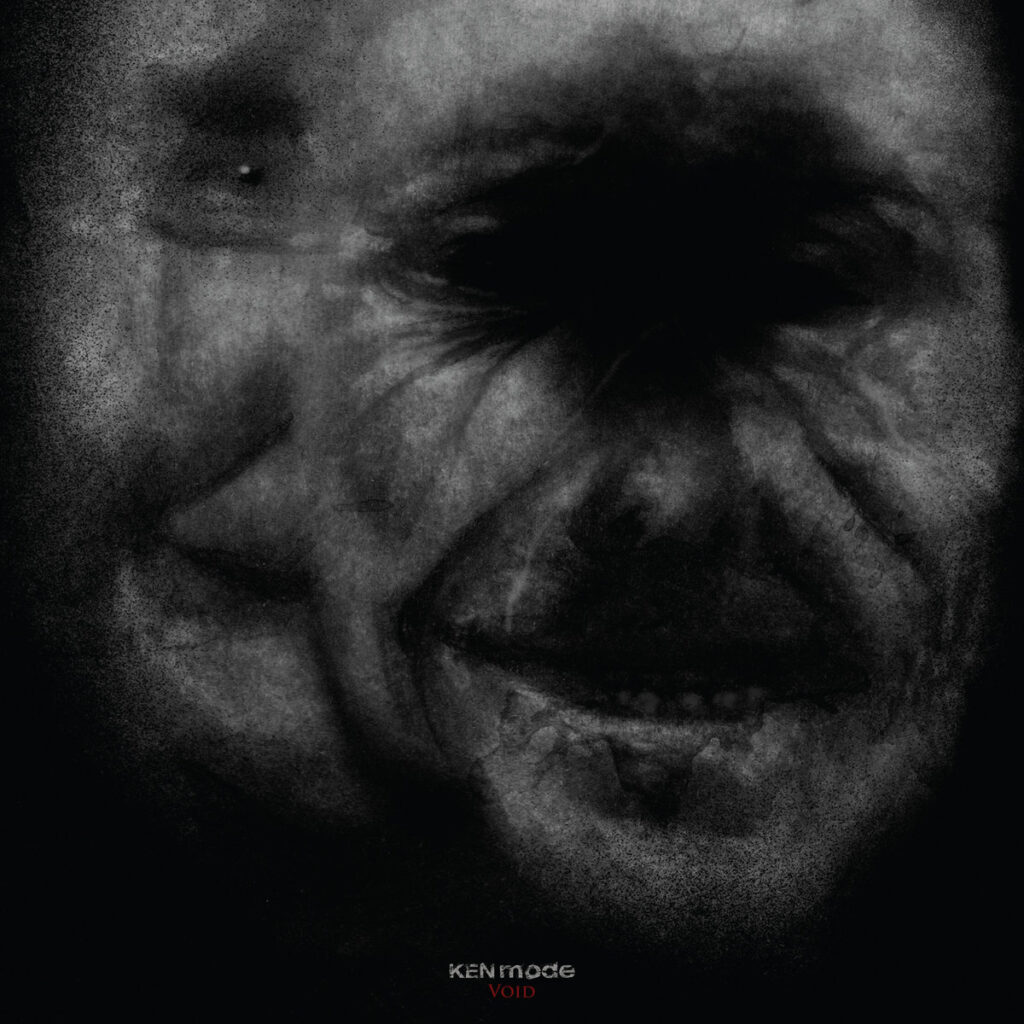
KEN mode slam through your living room wall with their specific brand of dissonant hardcore, albeit more contemplative and exploratory. VOID is the companion piece to the 8 track LP NULL released last year. Both albums were recorded and mastered at the same time, though where NULL is to be looked at in the light of the chaotic first year of the pandemic, the more melancholy vibe of VOID is the contemplative aftermath, the sadness that creeps in, the disgust at a lack of control in the face of a violently traumatic event. A rallying cry against mental illness, whilst being a direct reflection of the collapse of someone’s mental health during the pandemic, VOID completes the two album arc. It also welcomes multi-instrumentalist Kathyrn Kerr into the KEN mode fold as a permanent member. Kerr provided saxophone parts on the band’s last album, so when they decided they wanted to increase wrath of their sonic onslaught, it made sense to bring her on board.
In an interview with the band, guitarist and vocalist Jesse Matthewson speaks about how the album was born out of the 2021 lockdown. After the madness and chaos of the year before, the band felt that they needed to approach things from the angle of sadness and loss, therefore requiring a shift in the production and writing of the music.
Whilst the raw aggression and oddball riffing remain the same, VOID is definitely a step in a more sadness drenched direction. Even when the music is full of life and energy there is an unseen force of loss residing behind it all. The riffs might be a little slower, the notes linger a little longer before decaying into macabre vocals. At times Matthewson sounds like he is close to having a breakdown, the pain that resides in his voice wrenched raw across the madness inducing trumpet breaks on tracks like “I Cannot.”
Tomb Mold’s last record Planetary Clairvoyance garnered them plenty of (rightly earned) attention but The Enduring Spirit takes their slime covered brand of old school death metal to new heights. Their fourth album is littered with reams of prog metal nods; whole sections sound like they’ve been stripped from 70s and 80s prog rock concept albums. It’s something of a newer direction for Tomb Mold, as the band try to push every boundary, outwardly expanding like a fusion reactor caught in thermal runoff, consuming influences from jazz to prog rock and everything in between to create a labyrinthine yet highly focused piece of death metal that would stand up to anything released in the last few years. No wonder it took them four years to write it.
Whilst the band teased a more progressive direction with their tape release Aperture of Body last year, they hadn’t leapt into the swirling void of Lovecraftian imagery and mind bending song writing that The Enduring Spirit fully realises. The guitar work has stepped up noticeably since their last release, no doubt helped along by Vella’s time with frontier pushing doom band Dream Unending and Power’s dreampop side project Daydream Plus. It’s always a pleasure when the drummer is also the vocalist in the band, and whilst Klebanoff blasts out the vocals with the weight of a granite monolith he manages to stay interesting and technical with the drums, so that it never really just becomes a time keeping exercise. It’s another instrument that adds to the overall effectiveness of the tracks, especially in the proggier sections where his drumming is let loose and allowed to flourish alongside the rich lead tones and teasing chord progressions.

When it comes to metallic hardcore in the UK, the scene is rude health and then some. In recent years a plethora of bands have come aggressively stomping out of the underground from all four corners of the country and moshing their way to the top of the global scene. Located in the northern powerhouse of Manchester, Guilt Trip are one of these bands paving the way with this new, highly aggressive and gritty brand of UK hardcore alongside the likes of Malevolence and Heriot. Returning with their sophomore album Severance, a relentlessly bruising and skull splitting album packed with bludgeoning breakdowns as well as a few surprises that you wouldn’t expect.
The first thing you’ll notice is that the Manchester natives have evolved their sound to incorporate melody and more dynamic riffs alongside the implementation of higher quality production making Severance sound much more clinical, punchy and precise. In some ways it does feel like Guilt Trip have taken a page out of Malevolence’s playbook, especially in the latter half of the album where clean guitars and emotive melodies and clean vocals are used. While there may be an influence given the fact that Guilt Trip are signed to MLVLTD, the band have made significant strides to stand out from amongst their contemporaries.

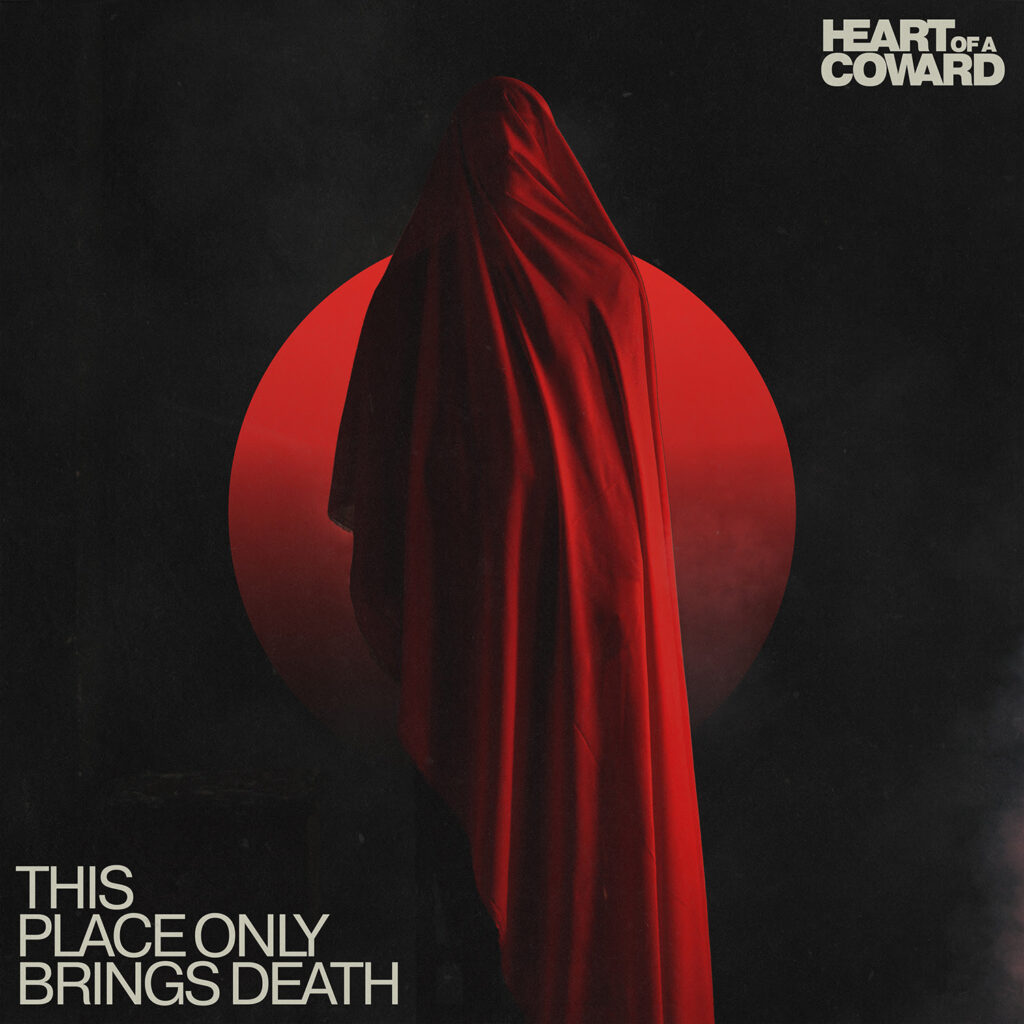
Sometimes, the world seems to be against you as a band, and it can seem that the stars just won’t align for you to succeed. For British metalcore veterans Heart Of A Coward, they not only lost their powerhouse vocalist and arguably biggest asset in Jamie Graham, but just as they were beginning to get a little bit of steam back, 2020 happened. With reviews of their first record with new vocalist Kaan Tasan, ‘The Disconnect’ being mixed, the future seemed uncertain for the group. However, with Tasan being allowed more time to bed in with the group, could the band recapture what made them so exciting in the first place on new record, This Place Brings Only Death?
Heart Of A Coward have always existed at the techier, more angular end of the ‘core spectrum, though never fully straying into djent waters. Mixing their chops with malicious bite made them stand out in the scene, and undoubtedly former vocalist Jamie Graham was a huge part of that. His cavernous roar, combined with his menacing presence and enunciation gave the band a leg up on their scene brethren. Possessing the riffs, the crunch and the choruses, they were beloved. Their earlier work also featured some fantastic production too, an area The Disconnect was slightly lacking in. Tasan is a good vocalist, that much isn’t in any doubt. It’s just that anyone following Jamie was going to struggle if they weren’t a perfect fit or as strong a presence.
Sonically, this record stacks up well against The Disconnect. It’s a bit step up from its predecessor; the band’s sound benefits from a beefy, slightly ramshackle production – hard balance to strike, but one they manage – and Tasan sounds a lot more confident in his delivery. It’s just that his delivery isn’t particularly unique or noteworthy. The main issue with this record is the lack of memorable tracks. Across the 10 songs, there’s not many hooks, choruses or even movements that stick in your brain. Tracks tend to act like similar shades of playdough pushed through a fun factory into a barely discernable cylinder of riffs and breakdowns, and the singles released prior to the album did very little to whet the appetite. ‘Devour Me’ has the biggest hope of being the album’s lasting legacy track, with its chorus and added electronic elements proving to be one of the highlights.
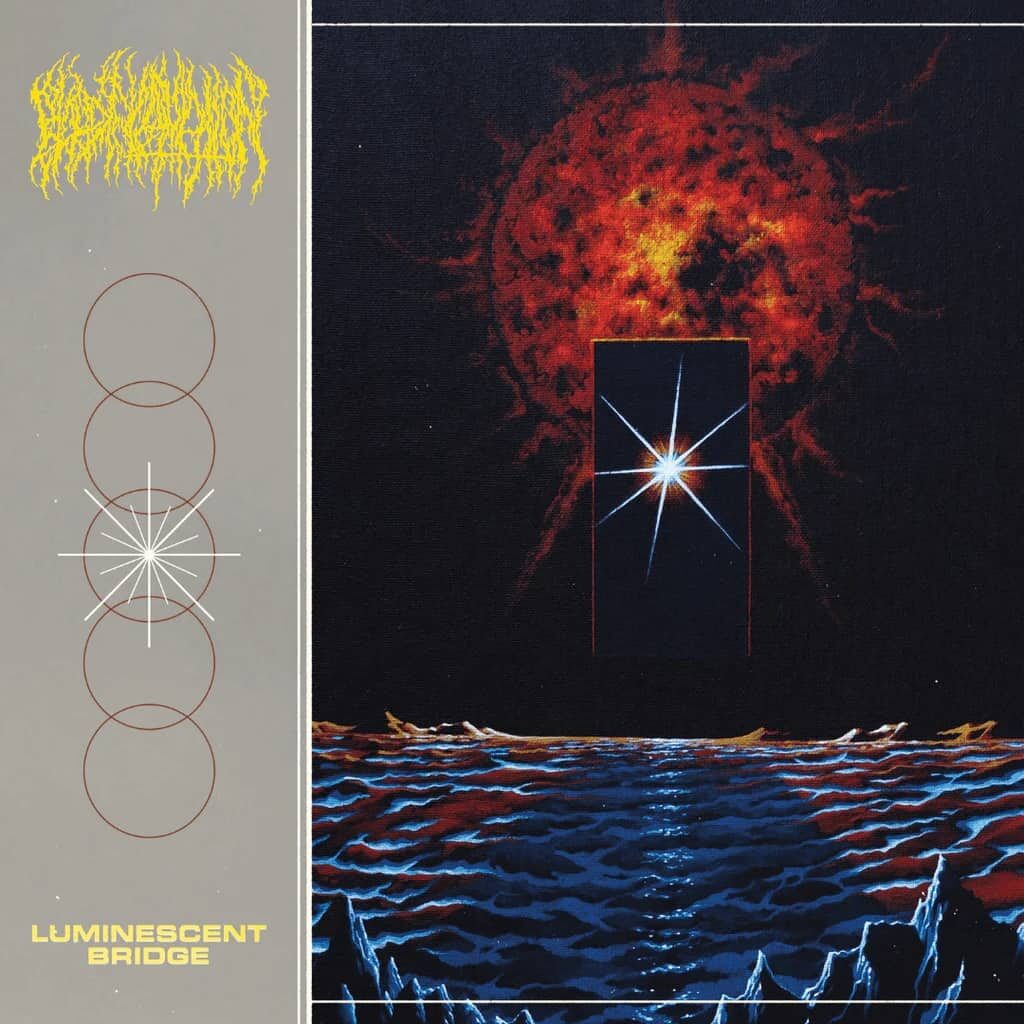
Blood Incantation, one of the most important bands in modern death metal, decided to surprise everyone with last year’s Timewave Zero. While it’s known that at the very least Paul Riedl likes to dabble in the ambient arts, it transpired out the rest of the members feel that way too, and the end product Timewave Zero seemed to divide the fan base between those that just wanted to lap up everything produced by these no doubt highly talented artists, and the ones who just wanted more blasting death metal in the vein of their previous releases rather than the ambient showcase they released.
Come 2023, and we’re treated to surprise release Luminescent Bridge; the first track on the EP evokes “Awakening from the Dream of Existence to the Multidimensional Nature of our Reality” with the kind of crushing heaviness we’ve come to expect over the years from the Colarado stalwarts. “Obliquity of the Ecliptic” is soaked in ambient textures and psychedelic overtones, beginning with a heavy metal gallop, followed by a short but powerful solo sounding like it’s straight off an early Morbid Angel record, with otherworldly divebombs and descending off kilter riffs Chuck Shuldiner himself would’ve been proud of. Riedl’s Grevlar style chanted vocals make an appearance too, conjuring up shades of the occult to accompany the coming madness. Soon the song slows into one of Blood Incantation’s signature psych breaks, twisting maelstroms, more phase than a lunar cycle and horrifying cyclical riffs pound your already desperate brain into oblivion before delivering you into the calming waves of the second track.
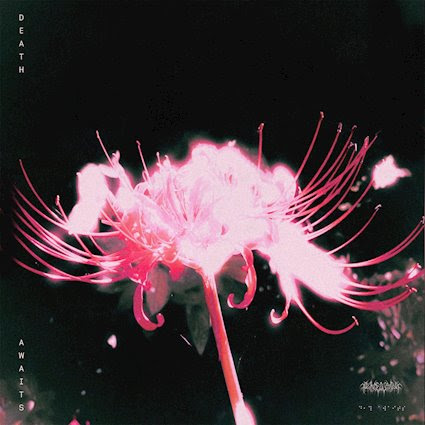
Blind Equation are a unique sounding band to say the least, led by songwriter, singer and producer James McHenry’s manic, screaming vocals and 8-bit, retro video game inspired synths and combining grindcore, extreme metal, chiptune and even hyperpop. A natural progression of the sounds of artists like The Locust or HEALTH, Blind Equation bring crushing brutality to speedrun Undertale to.
Despite being, what at first glance might seem like a gimmicky, one-trick Nintendocore album, Death Awaits jumps between genres masterfully, seamlessly blending all of its differing influences to keep itself fresh. Many of the tracks, like the opening title track fly out of the gate with a barrage of retro synths and intricate, barbarous drums alongside McHenry’s screeching, extreme vocals, however, under this brutal bleep-bloop facade, Blind Equation manage to create some real sonic depth. It’s the little touches that really set Death Awaits apart, for example on the track You Betrayed The Ones You Loved the use of 100 Gecs style ultra-processed clean vocals contrasting with McHenry’s extreme screams or the layering of drum & bass style programmed drums with recorded ones. These subtle changes to the formula keep, what could be a fairly predictable album, interesting.