
The second full length by the London trio, Pure Evil follows their debut The Goat, another title hinting towards the subtle juxtaposition that is Puppy’s love for spiked gauntlet adorned metal, popular culture and taking neither too seriously. The Goat was a fantastically unique record abundant with both charm and fun, and considering its contrast to the current state of UK rock, it beggars belief why it was criminally overlooked upon release. One would argue it wouldn’t be too hyperbolic to call it an antidote to both the deathly stoicism commonly found in UK metal and the beige formulaic sound that’s being tarmacked over the popular national rock sound. Thankfully, Pure Evil sees the band attempting to administer the shot for the second time.
Pure Evil isn’t a major musical step up or a departure from the contents of The Goat, but it doesn’t need to be; it’s a continuation of that dichotomy that makes Puppy such a unique and fascinating entity. As hinted at by album art that boasts something akin to that Fisher Price plastic castle we all loved as kids and as proven by the revelling riffs of ‘My Offer’ and electrified leads of ‘Wasted Little Heart’, the record sees Puppy embellishing the battle-axe wielding sensibilities of 80’s metal by implementing them into modernist pop songwriting to brilliant effect once again.
Sure, elitists could take offence to the band marrying classic metal tropes with the sensibilities of a genre that metal was once rallying against. But really, Puppy again forge a sound and aesthetic in a way that forgoes the toxic stereotypes associated with metal. The welcoming, celebratory warmth of ‘Watch It Glow’ stands as a funeral pyre to mundane heavy metal elitism and the grungy garage fuzz-pop of ‘Holy Water’ washes away all remaining dregs, leaving behind something refreshing and new within the modern metal canon.

As the ice cold winds howl around Norway, working its way through the icy fjords and snow covered mountains, the distinct, voracious stoner sound of Siberian Tusk was born. As a result of these warring environments around them, Siberian Tusk have crafted an engaging stoner rock sound with the grit, edge and chaos of punk rock. Slowly but surely creating a sound that is packed with tension and raw power, the band’s second album Reapers By Trade is an album drenched in creative aggression that is full of vigour and boldness. Building on the foundations that their debut album Save My Soul laded down, Siberian Tusk have become the architects of their own unique brand of stoner that has been continually invested in and developed over the space of the last six years.
Reapers By Trade is packed full of ball busting, gritty, rough edged riffs. A straight to the point white knuckle ride from start to finish incorporating classic elements of the bluesy stoner grooves that we all know and love with a new fuzz fuelled punk edge. In some areas, there are some similarities between Siberian Tusk and their Danish equivalents in Bersærk. With a tendency to lean on a thick, overdriven sound with memorable anatomic riffs set between hulking chugged chords and emphasised with behind the beat grooves, it would be fair to believe that there is something in the deep blue waters of the North Sea that both bands drink with a healthy thirst. The old school punk influences definitely gives this album a distinct charm and edge, but as the band also create across various genres outside of Siberian Tusk, this plethora of influence comes together and pushes and pulls the music into previously unknown areas. Reapers By Trade has a unique sting to it, as if it is taking part in the divine disciplinary and devotional practice of self-flagellation. Through grimacing teeth comes furious vocals that captivate as well as strike fear into the listener’s heart, as the raw aggression bursts its way through vocalist Begil’s lips. This devotion to this vehement sound works in the band’s favour throughout the first half of the album.

After nearly a full decade of kicking in doors and making their mark on an international scene, Void Of Vision have taken a step back from full length records as they prepare to drop the follow up to last years Chronicles I: Lust. Chronicles II: Heaven enters the game as a five track release via UNFD, and takes a slightly different approach to its subject matter than its forefather. Personal growth is a strong theme here, perfectly aligning with the band’s own musical development. Trading out the foretold narratives of misery and anguish, Void Of Vision bring to the table some of their more positive tribulations documented on record with a huge emphasis on standing strong and rallying to hope during dark times – a huge dose of something we could all do with. Including an excellent guest feature from Hannah Greenwood (Creeper) and a co-write from one of modern metal’s most brilliant composers – Heaven dictates concrete evidence of a band at their strongest.
‘BERGHAIN’ opens the record with all of metal’s best traits. Unsettling screams, soaring choruses & a killer breakdown to boot. Whilst it might not have been the opening track we’d have picked from the records listing – it certainly is not a poor performance. ‘DOMINATRIX’ quickly brings up the rear, and as the record’s lead single it was the perfect choice to give listeners a taste of the EP to come prior to release day. All five tracks are heavy for sure, but their melodic elements are so clearly defined that there is an extra layer of depth, rather than feeling like you’re being bludgeoned by just an onslaught of distorted guitars and double kicks.

James and the Cold Gun is a name that seemed to suddenly seemed to be popping up everywhere on the British music scene by the end of last year. Despite only existing as a band for a mere two years, relentless touring around the UK has allowed James Joseph and James Bliss to quickly build up a name for themselves as an act to watch on the alternative music scene; despite humbly billing themselves merely as an alternative rock band from South Wales with a DIY punk ethos. Despite the hectic touring schedule, the two-piece – in which, interestingly enough, both members play solely guitar and vocals – are ready to present the world with their debut EP release, False Start.
‘Seven’ opens up the EP with a fist-bumping buildup into electrically energetic rock and roll, with heavy slapping bass and fuzzed up guitar sounds reminiscent of Queens of the Stone Age, one of the band’s cited influences, though influences from the likes of Velvet Revolver and the ever feral Gallows are also noticeable in both the vocal delivery and guitar accompaniment. The duo have their 21st Century rock sound nailed, that much is immediately clear, and for the first track of a debut EP, it is good that it immediately leaves the listener wanting more.
The hard and fast energy continues throughout lead single ‘It’s Mutual’ and all the way through to the closure of the album; not since Fever 333 burst onto the scene half a decade ago has a debut EP presented such an unrelenting rock and roll tour de force whilst still clocking in at under twenty minutes. For sure certainty, James and the Cold Gun are an act that we – and probably everyone else in the country – will be hearing more from in the future.

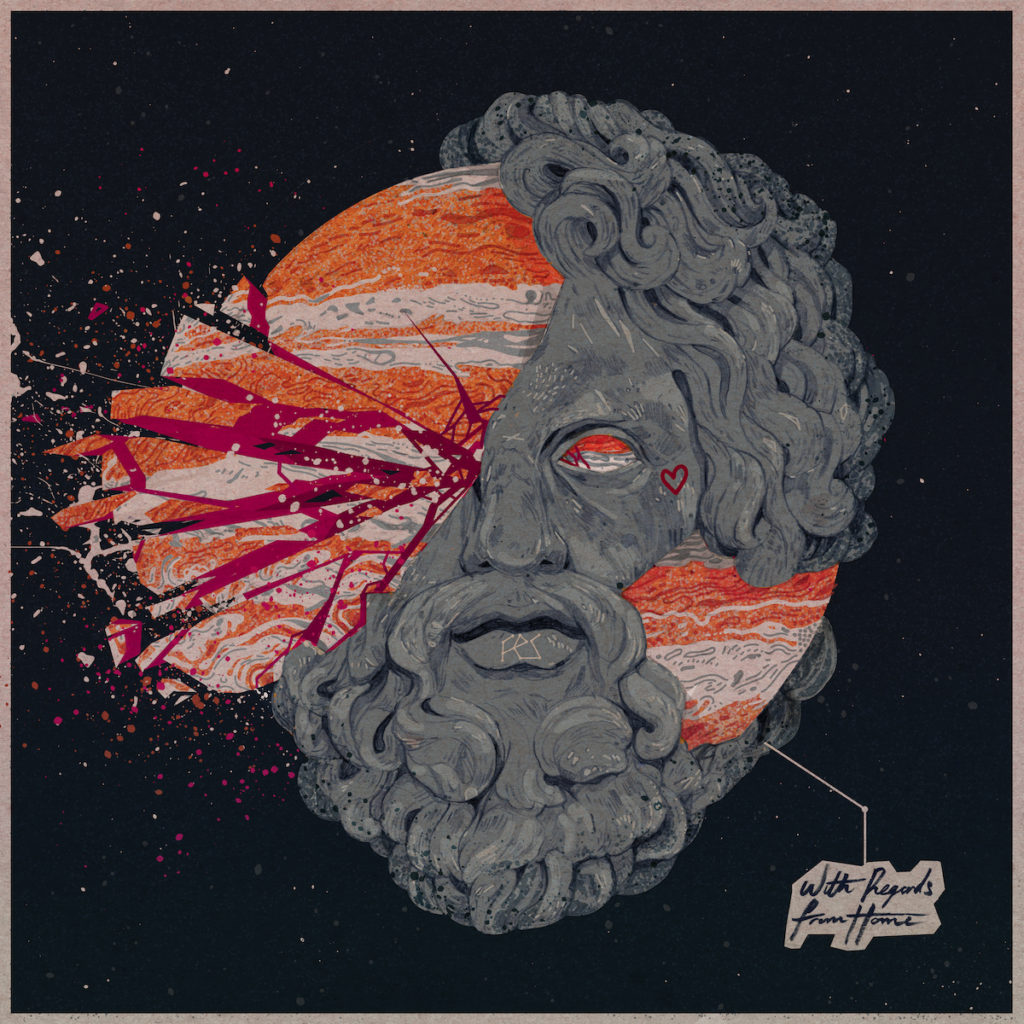
Released via Small Pond, With Regards From Home comes following a string of EPs and splits from the trio, records of greatness in their own right, but releases that hinted towards something far greater down the line. However, it wouldn’t be too hyperbolic to say that the contents of this full-length exceed expectations.
FES revolve around the juxtaposition of the sweetness of guitar driven pop-rock and the computed intricacies of math-rock delivered via slick, albeit sporadic tempo changes. They may not have been the one’s to pioneer the sound – with acts such as TTNG, Fish Tank and Orchards pushing it into the national conscious of the math-rock scene – but here, FES fully define it. All the unique components that made their sound have been tightened and each contrasting element has been pushed to it’s maximum. But still, their home-cooked approach to the genre has never felt more organic and natural.
With references to the likes of Fresh, Delta Sleep, Tricot, Colour, Martha and the trio of bands aforementioned bountiful, this is a musical honeypot of styles that is abound to be savoured by both those dedicated devotes of UK alt-punk and math-rock alike. Whilst the jangly riffs and pop-punk stomp of opener ‘Chew’ melt into the fluidity of ‘Clarinet’ and summer-scented angularity of ‘Sun Visor’, FES lay bare to their highly intricate sound in a way that’s far from disorientating or overwhelming. In fact, it’s the polar opposite. The fashion in which they intertwine these stereophonically polarising genres is palatable to a disarming agree. It’s akin to a seamless and ideal chemical reaction, one that would spur even the most stone-faced of math-rock aficionados to dance giddily, and in turn, the most excitable fans of guitar-driven pop into contemplative chin-strokers.
Squiggles is the musical project courtesy of Niall McCamley, previously the drummer of the now sadly defunct The Spook School. As those loyal to the national alt-punk scene will undoubtedly know, the Glaswegian band where a collective that lovingly championed concepts of trans rights, self-care and ardent inclusivity through their lush melodies prior to disbandment in 2019. It’s these inherent core traits that lie as the crux of Squiggles’ new EP Look What We Have Done, a record that’s designed to be the rallying point of a community dedicated to the empowering positivity of music – something far removed from the negative connotations of what stereotypically stands as a cult.
And positive and empowering it is. Across the four tracks that compose the record, McCamely channels a focus on inclusiveness that’s nuanced by lyrical themes of regret, identity and marching into an uncertain future with good company. All of this is immediately established with the self-prophetising ‘This Is A Wake Up Call’. Resonating the bedroom indie-punk sound that was synonymous with The Spook School, the track is a lo-fi contemplation of where one goes in life that’s driven by McCamley’s charmingly untrained vocals, flexible indie-punk melodicism and a strong sense of highly required optimism. The more jauntier, fuzzed out ‘We Only Came Here For Your Hearts’, continues in this sense, providing what’s easily an infectious ear worm and delightfully loose fretwork doodling.