The emo-pop and math rock influenced ParkWalker formed in 2018 and since then, have strongly rooted themselves into the diverse European DIY scene, especially in their home country of Germany. Influenced by acts such as American Football, The Appleseed Cast, and Rainer Maria, their long-awaited second album The Extra Mile may not be as dynamic or musically complex as some of their aforementioned contemporaries, but nevertheless still feels like a crisp winter walk in the park amongst the undeniable hum of city living.
Although the Stuttgart quartet clearly wear their influences on their sleeves, the clean and modern production courtesy of Christian Bethge (Messer) modernises a classic and well-loved sound through sheer warmth, technical precision, and subtle feelings of quiet yearning without ever coming across as melodramatic. Self-described as a slow stroll through sound and stillness, ParkWalker definitely deliver on that front by blending familiarly minimalistic soundscapes with lyrics that are heavily influenced by the quiet beauty of the natural world.
Some albums are so slickly produced that there’s not a note out of place, everything filtered and leveled and over-engineered until there’s no real passion left in it, all the energy drained out of it and replaced with an overly-glossy sheen of artificiality.
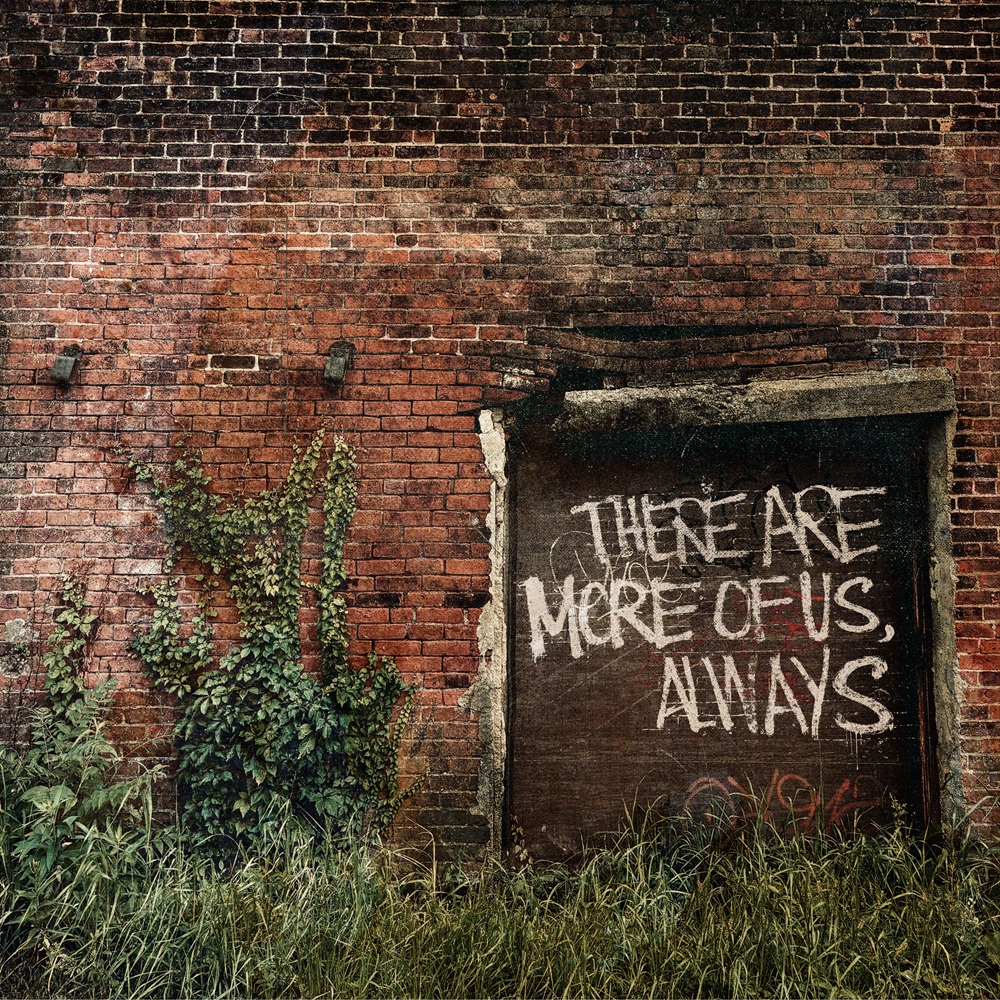
This is why it’s a delight to find there’s a deliciously raw edge to Jagged City‘s debut EP There Are More of Us, Always. This EP sounds less like a studio album and more like a session that’s been recorded and released instead. There’s a subtle echo to the instruments, like you’d find in a recording made in a practice room, but that’s not to suggest that anything here feels rough or amateurish. There’s a sublime display of musical talent on display here from the bass of Carlos Torres, former touring member of post-rock icons Explosions in the Sky, the guitar of Defeater’s Jake Woodruff, and the drumming and production talent of Urian Hackney. The album also features MONO‘s Takaakira Goto as a guest guitarist on the closing track, parentheses and all, ‘(Deluge in a Paper Cup)’.
MØL’s 2021 album Diorama was a masterclass in melody and emotion, taking Alcest’s formula for blackgaze and finding a way to marry both the frosty extremes of black metal with gorgeous, vulnerable melodies. In other words, it was always going to be a tall order to follow it up. Perhaps that’s why it took some four and a bit years for a sequel to emerge; or perhaps the Danes don’t actually give a fuck about expectations and just wanted to write the best possible album they could with the tools and experience they had.
Regardless, Dreamcrush is a remarkable next step for them, opening on lush chords with ‘Dream’ before vocalist Kim Song Sternkopf lets rip an excoriating, extended scream for the rest of the band to follow. It’s oddly uplifting in tone, echoing the major chord experimentation of Sunbather along with the rasping shrieks. ‘Dream’ itself acts as something of an extended introduction to both the album and second song ‘små forlis’, again opening with shrieks and furious riffs.
Something that’s quickly apparent though, is the band are leaning much, much more on Sternkopf’s sonorous baritone register along with a hefty dose of alt rock. Previously, it’s been deployed much more sparingly but on Dreamcrush it’s just as much a feature as his screams. An early highlight is lead single ‘Garland’, that pushes MØL’s sound skyward to arena proportions without sacrificing intensity. It’s arguably one of their finest tracks to date, a stunning show of Sternkopf’s croon, before its chorus takes flight.
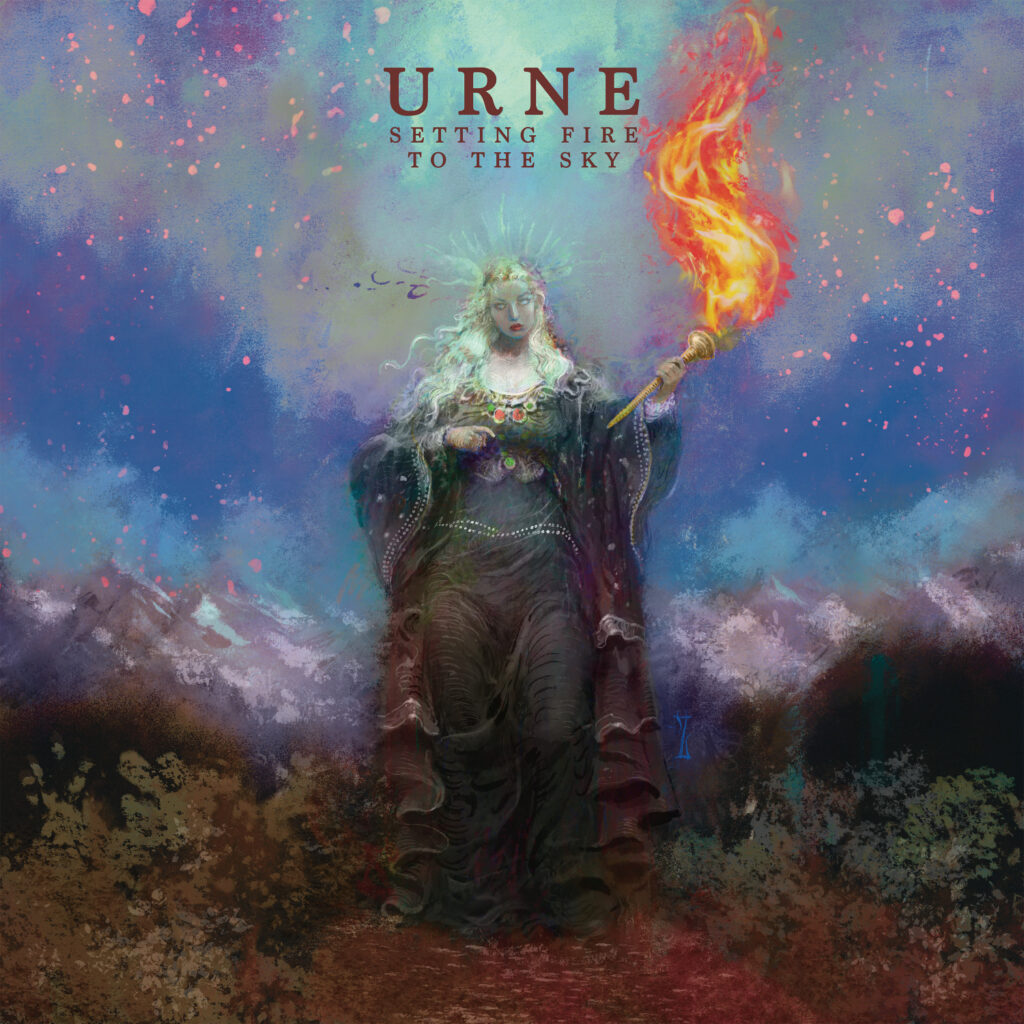
They say it takes three times to perfect the leap from underground titans to break into the main stream, and why wouldn’t you believe it with bands like Slayer, Motorhead and Green Day getting their foot in the door on each of their third releases. On the face of it, Urne should have gotten their foot not only in the door, but in the throne room with 2023’s A Feast On Sorrow, but looking back from then to now, it’s actually a good thing they stayed in the undergrowth as they’ve been stewing and writing in their collective juices since album two dropped.
Opening up with ‘Be Not Dismayed’, a soft acoustic guitar lulls you in before guitarist Angus Neyra’s crunchy guitar tone is rapid and precise throughout the song. For the next 48 minutes, Urne has you not only in their palm, but in a grip so tight it’s impossible to get out of it. Since …On Sorrow the band have upped their game exponentially. The musicianship has gotten tighter with the title track ‘Setting Fire To The Sky’ showing off their timing with drummer James Cook being slightly out of beat with the band, but it makes for an interestingly complex song that showcases Cook‘s shotgun blast snare in perfect condition.
Bassist/vocalist Joe Nally’s vocals are an integral part in making Urne as heavy as they are, and his vocals have improved tenfold since their last release. ‘The Spirit, Alive’ highlights his gritty vocal growls going from such, to a cleaner melodic affair then in an instant hitting his trademark wails. Doing this while his bass parts are as complex and fast as they can get is no mean feat, especially in the quicker passages within the album’s crevices.
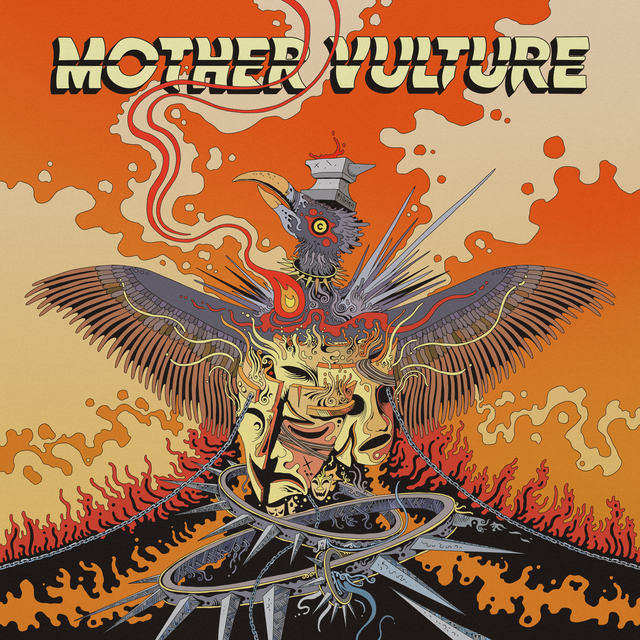
Despite our nation being frequently associated with the development and furtherance of rock music, the so-called UK rock and roll spirit is at best a cliché. After all, in this age of hypernormalisation where fads and fashions spin faster than current world events, it’s been digested and regurgitated so many times it’s essentially a spit-up relic at odds with our post-irony culture. Straight up UK rock music, for all its merits, has been culturally recycled so many times it’s difficult to gauge its original value given the endless layers of irony applied to it. There’s some outliers that cut through, and Mother Vulture are one.
Hailing from Bristol, Mother Vulture are a fresh proposition. While the band peddle the kind of fuzzy riff rock that’s in line with the original raisers of the movement, to call them a simple UK rock band would be somewhat of a hilarious downplay. Instead, it would be more accurate to say that Mother Vulture are a rock band that take the styles of 2000s radio rock and approach it with a post-modernist sense and hyper-intense attitude. Essentially, they sound like The Dillinger Escape Plan playing Reef songs. Their debut, Mother Knows Best, showed this brilliantly, but it’s new record that truly sees Mother Vulture come into their own. If The Darkness were British rock music for the turn-of-the-millennium optimist age group, Cartoon Violence is British rock for the collapse generation.
As ‘Mike Check’ opens proceedings with a scream that wouldn’t be out of place on a Deafheaven record and a barrel of riffs that sound like Turbowolf on a heroic dose of caffeine, Cartoon Violence goes from naught to red lining on the highest gear in seconds. From there, the accelerator barely leaves the floor for the run time of the record. Frenzied, wide-eyed momentum is the core crux of this record, with the album maintaining a kind of pace that’s throttling to the point of it being self-destructive.
Post-rock and shoegaze outfit Blanket formed in Blackpool in 2016 and have consistently been putting out atmospheric and dreamy soundscapes inspired by the likes of Circa Survive, This Will Destroy You and Sigur Rós ever since. Their latest effort True Blue is a further exploration into all things distorted and dreamy and self-described as an in-depth exploration into themes of nostalgia, the longing for brighter days ahead, and the ability to find beauty in the small things. It’s more than worth your time.
Essentially, True Blue feels like a warm mug of coffee on a chilly January day due to guitar tones that are pleasantly otherworldly despite Blanket clearly wearing their varied influences on their sleeves. However, long-time collaborator Sam Bloor (Lower Lane Studios) takes these influences and acknowledges them whilst also successfully modernising them through celestial elements and atmospheres.