Originally formed as a super-group featuring past members of The Safety Fire and Tesseract alongside then ex-The Faceless drummer Alex Rudinger, Good Tiger had enjoyed a steady output, releasing three albums between the span of 2016 and 2020 with a sound characterised by a blend of post-hardcore’s immediacy and emotion as well as prog metal’s technicality, groove and flair.
Released in the uncertainty of the summer of 2020, Good Tiger‘s last album Raised in a Doomsday Cult, didn’t get to enjoy the typical life cycle of an album post-release and, alongside the rest of the world at that time, the band were most likely thrown a massive spanner in the works and for all we knew, their extended inactivity could have equated to quiet dissolution.
And yet, at the end of last year came the surprise that Good Tiger were still very much in business and had prevailed, announcing the fourth chapter to their story, with Periphery being heavily intermingled in its DNA. Be it Matt Halpern taking over drumming duties, Adam “Nolly” Getgood mixing the new record or it being distributed by Periphery‘s own label, 3Dot Recordings.
Ominously named, The Most Negative Day Of The Year immediately sets the tone thematically in title alone. Time has not been kind to Good Tiger it seems and while the “why”‘s and the “what”‘s are never really addressed directly, it remains a recurring theme and guideline throughout the entirety of the album.
Opener ‘Square Breath’ instantly blows the dust away and kicks the bolts off with high energy however, promising an energised return as vocalist Elliot Coleman greets listeners with his unmistakable tone and pitch, embellished by tasteful background harmonising. The effectiveness of the production and overall mix is immediately notable ; the guitar and vocal arrangements, although busy, are all discernable and Halpern’s drums cut crisply through their many layers.
Tellingly titled ‘When Death First Appeared’ takes the energy down a notch in favour of what is likely one of the album’s biggest earworms once the chorus hits, hammering the meaning behind Coleman’s lyrics that much more effectively.
Revealing she’d relapsed, she cancelled a US headline tour and entered rehab. The turmoil of this time and resulting newfound sobriety led to her deciding to explore heavier pastures more thoroughly than she had previously, such as on 2022’s Nocturnal. With that plus huge changes in her own personal life, she found herself gravitating towards angrier sounds, more forceful lyrics that helped spill out her tribulations onto the page and into songs.
The end result is the five-track EP Somewhere In Between, releasing on her new home of SharpTone Records, that as its title suggests, captures her in a transitional part of her life. “If I’m being honest / I know how this goes,” she drily intones on opener ‘Evergreen Misery’, as she opens up seemingly about a relationship turned sour as someone sought to keep her miserable for their own entertainment. It’s accompanied by crunchy, modern metalcore guitars that are twisted into shapes that’ll be more familiar to Mothica fans.
This rearranging of new sounds into her own shapes is central to Somewhere In Between, allowing for that bridging between old and new sonically just as much as thematically. ‘Weapon’ features stabs of choral voices, a dash of symphonic influence but still planted firmly in the world of pop-laced metalcore. ‘Save Your Roses’ flits between pulsating synth bridges and soaring choruses, Mothica questioning fame and influence on the one hand, particularly as it comes to people only given their flowers when they’ve died. “How many more times can I break? / Don’t save your roses for my grave” glides over the bouncing guitar and drum work, conjuring images of rock clubs.
Twat Union. Not, as some might think, a new movement to legitimise sex work. It is, instead, the name of a deliciously in-your-face all-female sextet and after you listen to this EP you’ll never be able to hear the acronym KPI again without sniggering.
Their first EP, Don’t Look it in the Eye came out in 2025 and it was a delectable slice of unapologetic, woman-centric punk that covered everything from vibrators to nip-slips and the dubious delights of thrush and no, we don’t mean the bird. So where do you go from there with follow-up EP Don’t Blame the Peach? You go bigger. You go angrier. You go even more in-your-face with a merciless, unrelenting barrage of songs covering topics that even the most steadfastly devoted of couples struggle to address in the privacy of their own bedrooms.
The band use dark humour and theatricality to tackle real-world issues while mixing in a healthy heaping dose of all the things that polite society would prefer you not talk about. It’s a beautifully subversive way to both poke fun and draw attention to all the subtle ways women are treated as second-class citizens. There’s a look at the gender pay gap in ‘Pay Me More’, a timely release given that the UK’s Trades Union Congress (TUC) have just announced that it will take another 30 years for women to finally be paid the same as men doing the same job.
Wot Gorilla? were a criminally under appreciated gem back in 2012 when their last LP Kebnekaise was released; they pushed the boundaries of complex but melodic ear worms and while appearances at Reading and Leeds and Arctangent were achieved, a gradual hibernation ensued. But in leafy Halifax a pulse of creation always remained.
In 2026 the math rock scene is vastly different wilderness with bands like Love Rarely and Blight Town hitting rich veins to capture the imagination of new fans and old favourites like TTNG returning after their own hibernation. Wot Gorilla? in 2026 is almost a new band with only Matt Haigh (vocalist/guitarist) and Jonny Newman-Hay (bass/sax/vocals) remaining from the original line-up. Joining them are Jason Howard (drums) and Grant Beedan Clayton (guitars/vocals) who began as a fan only to join them in recent years to be a crucial component of the albums production with the majority of it being done at his house for a pure and invigorating DIY recording experience. Wot Gorilla? remained fully in control of the process with all the time in the world to bear fruit to produce an exquisite piece of progressive math-post hardcore.
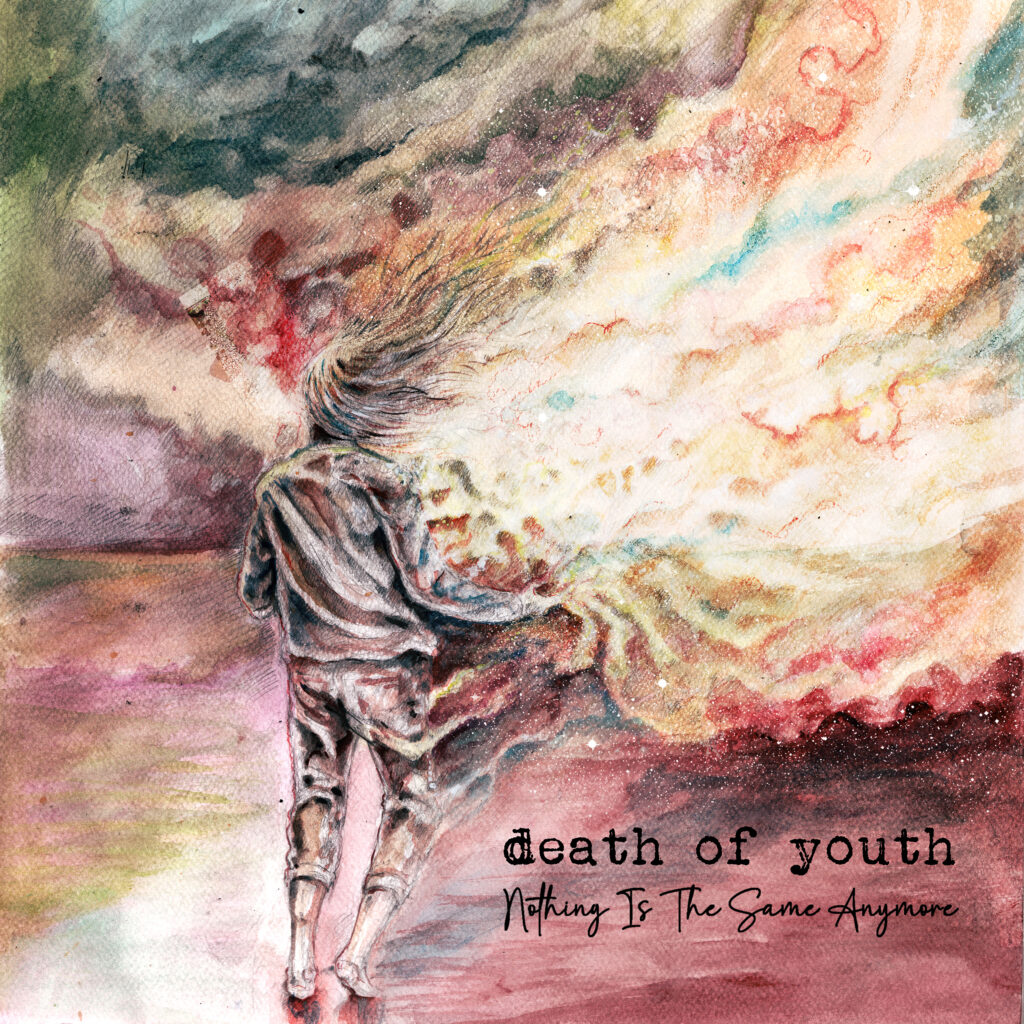
Overflowing with emotional toil and a ferocious determination, London’s Death of Youth are tremendous reminder of the 2010’s UK melodic hardcore scene where clean vocals were few but DIY ethics and harsh melancholy were essential. Bands like Landscapes and More Than Life balanced aggression with vulnerability to be part of a wave of bands which departed and were never replaced. Bands chasing algorithms and content was not the necessity it is today. It was about making music with a pure heart to inspire those who are struggling to survive in the world around them. Death of Youth bring this unforgiving approach into the modern day to show how socially little has changed and music this earnest is always in dire need.
Born from the bedroom of frontman Rob David, Nothing Is The Same Anymore was created following the end of a relationship and its foundations are built on a scarred emotional core which has never wavered. After the experience gained from 2 EP’s sharpening their DIY tools, Death of Youth have blossomed from a personal vehicle into a steadfast megaphone for topics both social and political.‘Desensitised’ and ‘Rumination’ are as powerful as Modern Life is War grabbing you by the throat with urgent acceleration to wash over you with passionate gang vocals and a distressed performance from frontman David. Spoken word sections of ‘Bystander’ give slight reprieve to let the messages soak into the conscience and elevate the music beyond its raw elements. Its midwest emo leanings twinkle and breathe beneath a poignant sample from John F Kennedy on ‘peace in all time’ to be a necessary reflection to ensure the barrage of melodic hardcore doesn’t wear thin too soon. The band have their ‘State of The Union’ moment with highlight ‘The Inverse of Patriotism’ which has all the direct fury of early Rise Against with a 100 second stampede biting the head of those using flags to push their warped agendas.
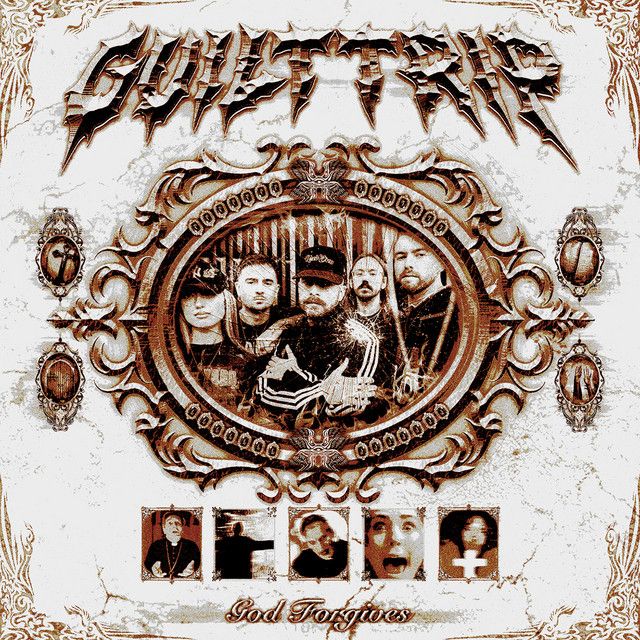
Guilt Trip remain to be one of the first names you think of when someone asks for hardcore recommendations, and this release has proved once again that they plan on keeping that place at the forefront of the minds of those that enjoy this genre. They know how to scatter influences from other genres throughout their records to keep their sound fresh, exciting, and always evolving, which is reflective of their maturity and experience as musicians.
Despite being known as a hardcore band, Guilt Trip have improved and refined their sound into something accessible for those unfamiliar with the genre. Pulling influences from metalcore and nu-metal may seem gimmicky to some, as though they’re trying to appeal to the masses, but when it works this well and spotlights them as one of the most well known bands in their genre, you can’t be mad at it, especially when they remain true to their hardcore roots above all else.